Can nature play support children’s relationships with family and peers?
Resource summary
This paper summarises the research evidence about whether nature play can support young children’s (2–12 years) relationships with their parents, siblings and peers. It highlights characteristics of nature play that can encourage meaningful interactions and describes how this can support positive relationship building. It also outlines some considerations for practitioners and other professionals working with young children and families.
CFCA short articles provide concise, plain-language summaries of research and emerging issues relevant to practitioners. They are designed to increase knowledge, raise awareness and help readers quickly access key insights and further information on a topic.
Introduction
Family and peer relationships play a central role in children’s social and emotional development, particularly in the early years (Butler et al., 2022; Rose et al., 2022). Positive connections with parents/carers, siblings and peers support children’s sense of security, belonging and wellbeing (Butler et al., 2022; Rose et al., 2022).
A small but growing body of research suggests that engaging with nature (i.e. ‘nature contact’) may be linked with a wide range of physical, cognitive, social and emotional benefits for children and adults (Fyfe-Johnson et al., 2021; Torjinski et al., 2024). Research also suggests that shared outdoor experiences, such as nature play, can support meaningful relationships between children and important people in their lives (Izenstark & Ebata, 2022; Prins et al., 2022; Ward et al., 2017).
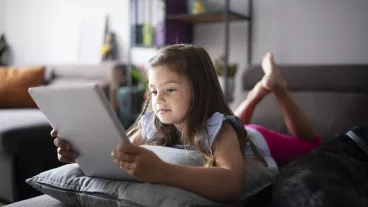
However, in many countries, including Australia, there is evidence to suggest that children are spending more time indoors and/or in sedentary and screen-based activities than previous generations (Alla, 2024; Torjinski et al., 2024). Some researchers and public commentators have raised concerns about these shifts. If children have fewer opportunities to actively engage with family and friends, could this negatively impact the quality of their everyday relationships (McClain & Vandermaas-Peeler, 2016; Ward et al., 2017)?
At the same time, there is growing interest in how outdoor nature play activities can create opportunities for relationship building between children and their parents, siblings and peers. This resource summarises the research evidence about whether nature play can contribute to strengthening a child’s positive relationships with the important people in their lives.
What is nature play?
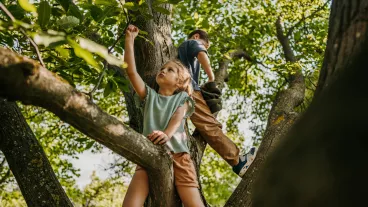
Nature play is a form of child-led, mostly unstructured play that is usually outdoors and involves play with natural elements or objects. Nature play can cover a range of activities and experiences but common features of nature play include (Alla & Truong, 2024; MacDonald et al., 2023):
- play or interaction with natural elements (e.g. logs, rocks and water) or sites (e.g. parks, forests and green areas)
- play activities – this can mean the mode of play (e.g. unstructured, child-led play) or types of activities (e.g. digging holes, climbing trees, hiding in bushes)
- types of experiences that being in nature provides (e.g. being mindful, feeling present and fully immersed in the surroundings)
- benefits gained (e.g. learning, skills, health and wellbeing).
The term ‘nature play’ is sometimes used interchangeably with related concepts including ‘nature contact’, ‘outdoor play’ and ‘risky play’.
For more information about nature play and how it is defined, read: Nature play and child wellbeing.
Can nature play support children’s relationships?
Research on this topic is still emerging and cannot provide a definitive answer to this question. However, some research suggests that when people spend time in nature, or even interacting with natural elements indoors (e.g. plants, leaves, observing clouds or birds outside), they tend to feel less stress and more positive emotions such as joy, calmness and patience (Fyfe-Johnsen et al., 2021; Harper et al., 2025; McClain & Vandermaas-Peeler, 2016; Torjinski et al., 2024).
Researchers have also suggested that when adults and children feel relaxed and positive, their interactions with one another are more likely to be attentive, warm and supportive. This can help relationships with family or friends grow and strengthen (Dankiw et al., 2023; Izenstark & Ebata, 2022; Torjinski et al., 2024).
Nature play may also support longer periods of focused, shared engagement. It enables children to spend quality time with their family members or friends, with fewer distractions from, for example, screens or background noise (Izenstark & Ebata, 2022; Ward et al., 2017).
Familiar environments, such as backyards, local parks or beaches, change with the seasons and weather, offering new things to notice, interact with and talk about. This creates ongoing opportunities for sharing new experiences and conversation (Torjinski et al., 2024). Together, these features mean that nature play can be a setting for play and a relational environment supporting connection and meaningful ways of being together (Alla & Truong, 2024; Izenstark & Ebata, 2022).
Nature play and parent–child relationships
Shared activities, whether indoors or outdoors, can provide opportunities for families to spend quality time together. However, some specific features of nature play may allow children and parents to interact in different ways.
Nature play activities typically have fewer rules and structure than other common family activities (e.g. board games, puzzles, sports) and are intended to be largely child-led. This means that adults and children have opportunities to interact with each other differently as traditional adult–child roles shift. Parents can take a step back and be co-explorers rather than directing play, encouraging their child to decide how they want to use the environment and natural materials in their games (Alme & Reime, 2021; Moore, 2021).
This kind of child-led interaction can foster mutual trust and respect between parents and children. It can also boost children’s sense of agency, confidence, curiosity and learning (Alme & Reime, 2021; Moore et al., 2021).
Shared experiences during nature play, where parents encourage children to be creative and direct play, can also support meaningful connections grounded in the present moment. (Aslanian et al., 2020). As a result, some parents report feeling more present, observant and actively engaged with their children during nature play (Dankiw et al., 2023; Ward et al., 2017).
As well as imaginative games, nature play can include activities such as walking, making things with natural materials and watching or learning about animals or plants. In these activities, parents and children can notice things together, respond to each other and work things out as a team.
Parents and children have reported that being outside together can provide space away from everyday stressors such as chores, homework and electronic devices, which can make it easier to enjoy relaxed conversation and time together (Dankiw et al., 2023; Izenstark & Ebata, 2022). These types of interactions can support emotional connection and are an important part of healthy parent–child relationships (Dankiw et al., 2023; Izenstark & Ebata, 2022; Torjinski et al., 2024).
Nature play and relationships between children
Nature play is often collaborative, rather than competitive. Some researchers suggest that this enhances opportunities for children to connect with each other, build relationships and manage conflict and disagreements (Dankiw et al., 2023; McClain & Vandermaas-Peeler, 2016).
Nature play often involves exploring, building or creating things as well as role play. These types of play tend to involve talking, negotiating, listening and trying new things as a team. Collaborative play can also allow children to bring different interests and ideas to the experience (Alme & Reime, 2021; Dankiw et al., 2023; Harper et al., 2025; McClain & Vandermaas-Peeler, 2016).
Nature play environments also tend to be inclusive play spaces for children of different abilities, temperaments and at different developmental stages (Coates & Pimlott-Wilson, 2019). Children can use a variety of materials and spaces to create roles for themselves within nature play and participate at their own pace.
This flexibility can reduce rivalry over toys, encourage participation and promote shared problem solving (Coates & Pimlott-Wilson, 2019). The open nature of outdoor spaces can also provide greater choice about when and how children engage with others (compared to many indoor play environments). This supports meaningful social connection and autonomy (Alme & Reime, 2021).
For example, in one study, teachers at an Australian primary school reported seeing children develop and strengthen pro-social behaviours through their participation in a nature play program (Harper et al., 2025). Teachers felt that during unstructured, outdoor play, children were able to compromise and resolve disagreements quickly and include more peers in their games than in other forms of play or leisure activity (Harper et al., 2025; Puhakka et al., 2019).
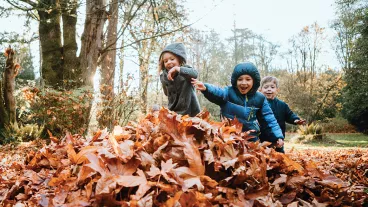
In other studies, parents have reported siblings working well together and supporting each other more during nature play activities – including making shelters with natural materials, navigating outdoor terrain (e.g. puddles or climbing logs) and inventing games outside – than during indoor play (Dankiw et al., 2020; Ward et al., 2017).
Practice considerations
Practitioners working with children and families can encourage parents and children to include nature play in their regular routines as a practical way to support positive relationships. The strategies below are drawn from nature play research and can help practitioners communicate the benefits of nature play. This includes the fact that it does not require special expertise or equipment but rather being open to shared experience, flexibility and connection.
Practitioners can:1
encourage parents and carers to take part in nature play activities alongside their children and to let their children take the lead in directing play
aim for ‘follow, don’t steer’ – observe first and then join in with curiosity
use simple prompts, such as ‘what do you think we should do next?’ rather than instructions
remind parents to be present during nature play by turning off or minimising the use of phones or screens, actively listening and engaging in play, and enjoying the time spent together
acknowledge parent concerns about safety, weather or mess during nature play and offer reassurance and practical guidance – this can boost parents’ confidence and comfort levels outdoors
share resources and information about safe and age-appropriate nature play ideas (refer to Further reading and resources).
The resource Engaging young children (0–5 years) in nature play outlines some simple ways that practitioners can support parents to involve young children in nature play.
Conclusion
There is some research to suggest that regularly engaging in nature play can support children to build and strengthen positive relationships with family members and peers. It can potentially provide opportunities for shared experiences, emotional connection, cooperation and inclusion. Nature play can also help children and families to feel calmer, reduce distractions and allow children to lead while adults act as co-explorers.
Supporting families and children to engage in nature play can be part of the toolkit of strategies used by practitioners to promote child and family wellbeing.
About the research this article is based on
This resource summarises the research evidence from studies identified as part of a previously published series of AIFS resources about nature play in early childhood. The studies were mostly qualitative and involved interviews with early childhood educators, primary teachers and parents.
Evidence about the relationship between nature play and child emotional and social wellbeing is still emerging. Findings generally point towards a positive relationship between nature play activities and child wellbeing but evidence about which specific characteristics or elements of nature play may contribute to positive outcomes is lacking. The studies drawn on for this resource do not include contexts where there is significant family conflict or maltreatment.
Further reading and resources
AIFS
Nature play – This collection of AIFS resources explores what the research evidence says about different types of nature contacts that promote child wellbeing; why young children (0–5 years) are spending more time indoors and what this could mean for their wellbeing; and information about young children’s engagement with nature play, including practical strategies to support children and families to get involved with nature play.
Other resources
Get up and Grow – Getting out and about: outdoor active play – This Australian Government resource provides tips for encouraging children, including toddlers and preschoolers, to participate in outdoor active play.
Outdoor play for children – The Raising Children Network website has a suite of resources for parents on outdoor play for children aged 0–8 years. These include ideas for games to play with babies, toddlers and preschoolers.
NaturePlay WA – Nature Play WA was established to increase the time Western Australian children spend in unstructured play outdoors and in nature.
little bluebirds – The little bluebirds website offers a collection of creative ideas for parents and educators to use with babies and toddlers when engaging with them outdoors.
References
Alla, K., & Truong, M. (2024). Nature play and child wellbeing. Australian Institute of Family Studies. aifs.gov.au/resources/policy-and-practice-papers/nature-play-and-child-wellbeing
Alla, K. (2024). Why are children spending more time indoors? Australian Institute of Family Studies. aifs.gov.au/resources/policy-and-practice-papers/why-are-children-spending-more-time-indoors
Alme, H., & Reime, M. A. (2021). Nature kindergartens: A space for children’s participation. Journal of Outdoor and Environmental Education, 24(2), 113–131. doi:10.1007/s42322-021-00081-y
Aslanian, T. K., Andresen, A. K., & Baasland, T. (2020). Climbing, hiding and having fun: Schoolchildren’s memories of holistic learning in a Norwegian kindergarten. Nordic Studies in Education, 40(3), 268–285. doi:10.23865/NSE.V40.2447
Bento, G., & Dias, G. (2017). The importance of outdoor play for young children’s healthy development. Porto Biomedical Journal, 2(5), 157–160. doi.org/10.1016/j.pbj.2017.03.003
Butler, N., Quigg, Z., Bates, R., Jones, L., Ashworth, E., Gowland, S. & Jones, M. (2022). The contributing role of family, school and peer supportive relationships in protecting the mental wellbeing of children and adolescents. School Mental Health, 14, 776–788. doi.org/10/1007/s12310-022-09502-9.
Coates, J. K., & Pimlott-Wilson, H. (2019). Learning while playing: Children’s forest school experiences in the UK. British Education Research Journal, 45(1), 21–40. doi.org/10/1002/berj.3491
Dankiw, K. A., Tsiros, M. D., Baldock, K. L., & Kumar, S. (2020). The impacts of unstructured nature play on health in early childhood development: A systematic review. PloS one, 15(2), doi.org/10.1371/journal.pone.0229006
Dankiw, K. A., Kumar, S., Baldock, K. L., & Tsiros, M. D. (2023). Parent and early childhood educator perspectives of unstructured nature play for young children: A qualitative descriptive study. PloS one,18(6). doi:10.1371/journal.pone.0286468.
Fyfe-Johnson, A. L., Hazlehurst, M. F., Perrins, S. P., Bratman, G. N., Thomas, R., Garrett, K. A., Hafferty, K.R., Cullaz, T.M., Marcuse, E.K. & Tandon, P.S. (2021). Nature and children’s health: A systematic review. Pediatrics, 148(4). doi:10.1542/peds.2020-049155
Harper, A., Hespos, S. & Gray, T. (2025). Nature play in primary school: Supporting holistic development through outdoor learning. Education Sciences, 15(11). doi.org/10.3390/edusci15111487.
Izenstark, D., & Ebata, A. T. (2022). Why families go outside: An exploration of mothers’ and daughters’ family-based nature activities. Leisure Sciences, 44(5), 559–577. doi:10.1080/01490400.2019.1625293
MacDonald, J. B., Butler, K., & Alla, K. (2023). Engaging young children (0–5 years) in nature play (Practice Guide). Australian Institute of Family Studies. aifs.gov.au/resources/practice-guides/engaging-young-children-0-5-years-nature-play
McClain, C., & Vandermaas-Peeler, M. (2016). Social contexts of development in natural outdoor environments: Children’s motor activities, personal challenges and peer interactions at the river and the creek. Journal of Adventure Education and Outdoor Learning, 16(1), 31–48. doi:10.1080/14729679.2015.1050682
Moore, D., Morrissey, A.-M., & Robertson, N. (2021). ‘I feel like I’m getting sad there’: Early childhood outdoor play spaces as places for children’s wellbeing. Early Childhood Development and Care, 191(6), 933–951. doi.org/10.1080/03004430.2019.1651306.
Prins, J., van der Wilte, F., van der Veen, C., & Hovinga, D. (2022). Nature play in early childhood education: A systematic review and meta ethnography of qualitative research. Frontiers in Psychology, 13. doi:10.3389/fpsyg.2022.995164
Puhakka, R., Rantala, O., Roslund, M. I., Rajaniemi, J., Laitinen, O. H., Sinkkonen, A. et al. (2019). Greening of daycare yards with biodiverse materials affords well-being, play and environmental relationships. International Journal of Environmental Research and Public Health, 16(16), 1–16. doi:10.3390/ijerph16162948
Rose, A. J., Borowski, S. K., Spiekerman, A. & Smith, R. L. (2022). Children’s friendships. In P.K. Smith & C.H. Hart (Eds.), The Wiley-Blackwell handbook of childhood social development, Third Edition (pp. 487–502). doi.org/10.1002/9781119679028.ch28.
Torjinski, M., Cliff, D., & Horwood, S. (2024). Associations between nature exposure, screen use, and parent-child relations: A scoping review. Systematic Reviews, 13, 305. doi:10.1186/s13643-024-02690-2
Ward, T., Goldingay, S., & Parson, J. (2017). Evaluating a supported nature play programme, parents’ perspectives. Early Child Development and Care, 189(2), 270–283. doi:10.1080/03004430.2017.1317764
1Alme & Reime, 2021; Bento & Dias, 2017; Dankiw et al., 2020; MacDonald et al., 2023; Moore et al., 2021; Ward et al., 2017
Acknowledgements
Kylie Butler is a Senior Research Officer in the Child Family Community Australia team. Kristel Alla was a researcher in Child Family Community Australia team at the time of writing.
25 August 2026
Related publications
Nature play and child wellbeing
This resource summarises what the research evidence says about the different types of contacts with nature (‘nature…
Engaging young children (0-5 years) in nature play
This practice guide synthesises research evidence relating to young children's (0-5 years) engagement in nature play.
Why are children spending more time indoors?
This resource describes what the research says about why young children (0–5 years) are spending more timeindoors and…