How self-reported alcohol use and masculinities are related to the reported use of intimate partner violence
Sensitive content warning
This research explores the association of self-reported alcohol use and masculinities with the reported use of intimate partner violence behaviours in a representative sample of Australian men. It takes a public health approach, considering how improving men’s health and wellbeing may contribute to the prevention of intimate partner violence.
The report includes a focus on specific gender-related norms or roles traditionally associated with men, rather than gender identities or broader characteristics of men. These were measured using validated survey instruments that assess particular attitudes and behaviours: the Conformity to Masculine Norms Inventory (CMNI) and the Traditional Masculinity-Femininity (TMF) scale. The CMNI measures adherence to masculine norms and the TMF measures self-conceptualised gender roles.
In relation to this aspect of the report, there is no suggestion that men, or masculine norms or gender roles overall, are inherently harmful. Instead, the report aims to explore specific, measurable patterns that may inform prevention efforts in particular contexts. This framing does not shift responsibility away from the person who uses violence: responsibility for intimate partner violence rests with the person who uses it, not the person who experiences violence.
Key findings and implications
Using data from Wave 1 (2013–14) and Wave 4 (2022) of Ten to Men: The Australian Longitudinal Study on Male Health, we found:
- Higher-risk alcohol use was associated with men starting to use intimate partner violence (IPV) over time. Men with hazardous drinking at Wave 1 were 27% more likely to initiate IPV by Wave 4 than low-risk drinkers; men with harmful use or possible dependence were 57% more likely.
- The relationship between alcohol use and IPV was similar across the different forms of IPV measured (emotional-type abuse, physical violence and sexual abuse) and was strongest for the use of physical IPV. Men with harmful use/possible dependence had around double the risk (119%) of initiating physical IPV than low-risk drinkers.
- How much men drank in a typical session mattered more than how often they drank. Men who typically drank 10+ standard drinks were 55% more likely to initiate IPV than non-drinkers; drinking frequency and age at first drink were not linked to later IPV initiation.
- Overall scores for conformity to masculine norms were not associated with IPV initiation but some specific norms were. Higher scores on the measure, used in Wave 1, for the domains of playboy, violence and risk taking were associated with starting to use IPV. In contrast, patterns combining emotional openness, self-reliance and primacy of work were associated with a lower likelihood of starting to use IPV.
- Another masculinity-related scale that assessed gender-role identity was used in Wave 4 and there was no clear association with the use of IPV.
- There was little evidence that self-reported masculinities changed the strength of the relationship between alcohol use and IPV initiation. Higher-risk drinking was linked to IPV regardless of the strength of conformity to these masculine norms. The combined highest-risk group (harmful/probable alcohol dependence plus high scores on the masculine norms measure used at Wave 1) showed at most a modest additional increase in risk of IPV use compared with either high alcohol risk or stronger conformity to specific masculine norms alone.
These findings suggest the following could enhance policy and practice to support IPV prevention efforts:
- Use alcohol harm reduction as a practical lever for IPV prevention. Strengthen routine alcohol screening and brief intervention/referral pathways in settings that see large numbers of men (primary care, mental health and community services), with clear, safe escalation pathways where IPV risk is identified.
- Prioritise indicators of heavier drinking in risk identification for IPV initiation. Policies and practice guidance should focus on current severity/patterns rather than drinking frequency alone for men, as these were the measures most predictive of later use of IPV.
- Target the specific masculine norms associated with IPV use. While this report found little evidence that these norms change the strength of the alcohol–IPV association, the highest observed risks tended to be among men with both higher-risk drinking and higher-risk masculine norm profiles. This suggests prevention and behaviour-change approaches may be particularly valuable when targeted to men already identified as higher risk (e.g. through alcohol-related risk) and should address norms related to violence acceptance, risk taking, sexual entitlement and status/power, and build skills such as emotion regulation and non-violent conflict management – integrated with alcohol-focused interventions where relevant.
- Taken together, these findings point to the potential value of coordinated alcohol and other drugs–family and domestic violence (AOD–FDV) pathways, rather than separate, parallel responses. This includes alcohol interventions that incorporate safe identification of family violence risk and enable appropriate referral, as well as specialist programs that address both alcohol-related harm and relevant attitudes and behaviours as part of a tailored response.
Overview
This report uses data from Ten to Men: The Australian Longitudinal Study on Male Health (Ten to Men) to examine how alcohol use and self-reported masculinities are associated with the use of intimate partner violence (IPV) by Australian men. These factors were selected based on data availability, existing evidence gaps and policy relevance, including to the National Plan to End Violence Against Women and Children 2022–2032 (the National Plan).
A brief literature review was conducted to identify relevant research and evidence gaps related to factors associated with the use of IPV. This informed the development of our research questions.
Three series of analyses were conducted for each risk factor:
- Long-term (longitudinal) analysis was used to examine these risk factors, measured in 2013–14 (Wave 1 of Ten to Men), in relation to the incidence of IPV use (defined as the new occurrence of using IPV between 2013–14 and 2022 (Wave 4) among those who had not reported IPV use at 2013–14).
- Point-in-time (cross-sectional) analyses was used to explore the association between these risk factors and prevalence of IPV (defined as ever having used IPV) at 2 time points, 2013–14 and 2022, separately.
- We also examined whether the link between alcohol use and IPV use varied across levels of adherence to masculinity norms, to assess whether these factors interacted with one another. These interaction analyses were conducted using both long-term and point-in-time analyses.
This report follows this process and concludes with a discussion of the main findings and key policy and practice recommendations.
What do we know?
IPV refers to any behaviour within an intimate relationship (including current or past marriages, domestic partnerships or dates) that causes physical, sexual or psychological harm (Department of Social Services [DSS], 2022). IPV is a critical health issue in Australia and has been described as a national crisis by advocates, members of parliament and support services (Department of the Prime Minister and Cabinet [PMC], 2024). Reducing the rates of IPV and other forms of family, domestic and sexual violence is a national priority that requires an evidence-informed approach to address the drivers of violence across all areas of society (Campbell et al., 2024; O’Donnell et al., 2025; Stavrou et al., 2016).
The use of violence and/or abuse in intimate relationships is a well-documented issue in Australia. Research indicates that the likelihood of such behaviour is higher among men than women (Australian Institute of Health and Welfare [AIHW], 2025; Flood et al., 2022).1 The National Plan includes engaging with men and boys as part of prevention efforts to end violence against women and children (DSS, 2022). Recent government responses have included a stronger focus on engaging men and boys in prevention efforts, the expansion of men’s behaviour change programs and new early intervention services for men at risk of using violence (Domestic, Family and Sexual Violence Commission [DFSVC], 2025; Flood, 2024).
Men’s use of violence in relationships remains a significant concern in Australia, yet most of the available evidence comes from either criminal justice records or studies of specific groups of men (Flood et al., 2022). While these sources provide valuable insights, they cannot provide information about how common IPV use is at a population level or the drivers of IPV use among men in general (Payne & Morgan, 2024). Generating population-based evidence is essential to inform strategies aimed at reducing IPV and supporting the objectives of the National Plan (DSS, 2022). Identifying factors associated with IPV use is crucial for the design of effective prevention and intervention approaches (Norén et al., 2025; Our Watch, 2021; Yonfa et al., 2021).
Alcohol and the use of IPV
Research over the past 40 years has shown that alcohol consumption is linked to the occurrence and severity of IPV (Leonard & Quigley, 2017). A meta-analysis of 285 studies (including 627,726 participants) found that alcohol use was strongly associated with both IPV victimisation and perpetration, especially higher-risk alcohol use, alcohol dependence and patterns of drinking that may cause harm (Cafferky et al., 2018).
Specific alcohol consumption patterns such as heavy episodic drinking (Laslett et al., 2021) and early exposure to alcohol (Feingold et al., 2015) also appear to increase the use of IPV. Similarly, strong links between alcohol consumption and IPV use have been reported internationally by the World Health Organization (Harald, 2001), although estimates vary considerably by country and region.
Understanding the link between alcohol use and IPV use identifies a potentially modifiable factor that can be addressed through prevention and policy. While this link is generally observed globally, its variation differs across contexts, highlighting the need for tailored interventions and country-specific research to ensure strategies are effective for different populations.
Evidence suggests that programs designed for men who use IPV that incorporate some treatment for substance use issues may be more successful at reducing the subsequent use of IPV, as well as supporting healthier drinking behaviours (Australia’s National Research Organisation for Women’s Safety [ANROWS], 2025; World Health Organization [WHO], 2019). Policies aimed at reducing alcohol availability, such as restricting trading hours for licensed venues, increasing alcohol taxes, limiting the density of alcohol outlets and enforcing minimum legal drinking ages, have also had some effect on reducing IPV at a population level (Kypri et al., 2011; Livingston, 2011; WHO, 2019).
Questions remain about who is most likely to use alcohol-related IPV and which situational and personal factors should be targeted to make interventions more effective for primary prevention. The complexity of IPV prevalence and patterns, and its association with harmful drinking behaviours, has limited the development of targeted public health and policy interventions (Leonard & Quigley, 2017).
Broader contextual influences, such as cultural norms, socio-economic conditions and community factors, shape both alcohol consumption and the use of IPV, often in interconnected ways (WHO, 2019). These further contribute to the challenge of designing and evaluating interventions to prevent the use of IPV that are effective across diverse populations.
Overall, many patterns of alcohol consumption have been linked to IPV use, especially among men. However, because these patterns are rarely able to be examined simultaneously in a representative, nationwide sample – and because estimates vary considerably across countries and contexts (Harald, 2001; WHO, 2019) – findings about which patterns of alcohol use most strongly predict the use of IPV have sometimes been inconsistent (Leonard & Quigley, 2017). This gap may have contributed to some of the conflicting evidence in the literature.
Self-reported masculinities and the use of IPV
Gender norms are shaped by social expectations and beliefs about how people are perceived and should behave based on their gender. These norms have long been linked to IPV (see Clare et al., 2021 for a review). Traditional masculine norms, in this context, refer to the socially constructed attributes, roles and behaviours typically associated with men – such as being tough, emotionally restrained, in control and sexually dominant (Borinca & Gkinopoulos, 2025; Fowler & Geers, 2017; Neilson et al., 2020).
Previous research has found that men who strongly adhere to these traditional masculine norms were more likely to use IPV (Jewkes et al., 2015). However, masculine norms can be difficult to measure as there is no single or universally accepted definition of masculinity. It is a concept that continues to evolve, shaped by cultural, social and historical influences.
A review of 23 studies from 22 countries (mostly the USA, with some other international studies but no Australian data) found mixed results. It showed that while beliefs about men’s sexual entitlements and the acceptability of violence were sometimes linked to IPV use, these associations varied depending on the type of measure used (McCarthy et al., 2018). The review also found that using multi-item indicators and tested scales was more likely to show an association with IPV than using single-item measures. This suggests that no single trait is solely responsible for the use of IPV – rather, multiple dimensions may play a role. Despite this international evidence, multi-item masculinity measures (such as the ones used in Ten to Men) have not yet been widely tested or used in Australia.
Another factor that may influence men’s use of IPV is masculine discrepancy stress – the distress men may feel when they think they don’t live up to society’s expectations of masculinity (Reidy et al., 2014, Sileo et al., 2022). While this stress is not directly measured in Ten to Men, the Traditional Masculinity-Femininity (TMF) scale used in Wave 4 offers insight into how men see themselves in relation to a spectrum of traditional masculine and feminine traits. Understanding these self-perceptions is important for informing prevention strategies that promote healthy expressions of masculinity and reduce reliance on harmful norms. This report explores these links to support strengths-based approaches that build on men’s positive identities and resilience.
How will this research build on the evidence base?
This analysis builds on the evidence base for the relationships of alcohol use and self-reported masculinities with IPV use by using unique longitudinal data from Ten to Men – a nationally representative cohort of Australian men. Unlike most of the existing evidence, which is largely cross-sectional (Gilchrist et al., 2010; Kulak et al., 2025; Leonard & Quigley, 2017), Ten to Men measured alcohol use and IPV behaviours in 2013–14 and again in 2022.2 By focusing on men who reported never using IPV at baseline, we can assess whether higher alcohol consumption in 2013–14 is associated with a new occurrence (incidence) of IPV by 2022, strengthening evidence about temporal ordering and informing prevention for groups at higher risk (Curtis et al., 2019). We also report cross-sectional findings alongside longitudinal results to provide both a time-sensitive snapshot and a longer-term view, and to take advantage of the larger cross-sectional samples when exploring behavioural profiles.
The impact of different alcohol consumption patterns – such as frequency per week, intensity per session and signs of alcohol dependence – on the risk of starting or continuing to use IPV remains unclear (Cafferky et al., 2018; Leonard & Quigley, 2017; Wilson et al., 2014), partly because studies vary in how they define and assess both alcohol use and IPV behaviours. In contrast, Ten to Men used validated alcohol screening tools across multiple waves, allowing consistent comparisons within the same cohort.
The relationship between alcohol and IPV is complex (Leonard & Quigley, 2017), with many factors influencing alcohol use, IPV occurrence and the strength of the association between them. Using Ten to Men data – where we measured a range of potential confounders3 and can adjust for them using a causal framework – we can provide a clearer picture of how alcohol and IPV use are associated.
Similarly, most research on self-reported masculinities and the use of IPV has relied on cross-sectional designs, often within specific populations, such as military veterans (Iverson et al., 2024), university students (Albright et al., 2019) and Hispanic males in the USA (Mancera et al., 2017). This limits generalisability and makes it difficult to understand how self-reported masculinity influences IPV use over time; this limitation has been noted in reviews (McCarthy et al., 2018).
Measures of self-reported masculinities in Ten to Men used 2 validated tools – the Conformity to Masculine Norms Inventory (CMNI) in Wave 1 (2013–14) and the Traditional Masculinity-Femininity (TMF) scale in Wave 4 (2022). Both measure multiple aspects of self-reported masculinities (described in detail in the Methods section below). These types of validated multi-item measures were more likely to be associated with IPV (McCarthy et al., 2018) and capture a range of thoughts and feelings related to masculinities.
Current evidence often overlooks how self-reported masculinities overlap with other factors – such as socio-economic status, cultural background and age – to influence the risk of using IPV (Próspero, 2008; Willie et al., 2018). Using Ten to Men, which includes these measures, we can take these factors into account when examining the association between self-reported masculinities and IPV use.
Finally, factors can combine in different ways – either one factor changes the effect of another through statistical interaction (effect modification) or groups with combined exposure may have higher risk (joint effects). Evidence on whether drinking and masculine norms interact to influence the risk of IPV use is limited, with few studies examining these patterns under heavy episodic drinking (Laslett et al., 2021; Willoughby et al., 2026). Using Ten to Men, we can examine alcohol use and self-reported masculinities together when assessing both the onset of IPV use over time and the presence of IPV use at specific points.
The specific research questions for this report are:
a. Is alcohol use associated with new reported use of IPV? Which of the following specific measures are most relevant?4
- Total Alcohol Use Disorders Identification Test (AUDIT) score
- alcohol frequency
- number of standard drinks (on a drinking day)
- age at first alcoholic drink
b. Is alcohol use cross-sectionally associated with reported use of IPV at Wave 1 and/or Wave 4? Which of the specific alcohol use measures are most relevant?
a. Are self-reported masculinities associated with new reported use of IPV? Which of the following measures of masculinities are most relevant?
- total score for conformity to traditional masculine norms measures
- scores in specific CMNI and TMF domains
- simplified representation of masculinity domains
b. Are self-reported masculinities cross-sectionally associated with reported use of IPV at Wave 1 and/or Wave 4? Which of the specific measures of masculinities are most relevant?
- How do alcohol use and masculinities operate together in relation to reported use of IPV?
- Does the association between alcohol use and reported use of IPV differ by levels of masculinities?
- Is reported use of IPV higher under exposure to both alcohol use and self-reported masculinities than under exposure to either factor alone?
Methods
Overview and conceptual framework
The outcome was reported use of IPV (categorised as never vs ever). The risk factors were alcohol use and self-reported masculinities – conformity to masculine norms (CMNI in 2013–14) and gender-role identity (TMF in 2022) – examined separately and together.
We conducted 3 sets of analyses:
- Longitudinal (incidence5) analysis: Alcohol use and adherence to masculine norms, measured in 2013–14 (Wave 1), were examined in relation to IPV use (new onset/incidence) reported by 2022 (Wave 4), for men who reported no IPV use at Wave 1. This addresses research questions 1a and 2a.
- Cross-sectional (prevalence6) analyses: Associations between alcohol use, self-reported masculinities and ever having used IPV were examined separately at Wave 1 (2013–14; alcohol and adherence to masculine norms) and Wave 4 (2022; alcohol and gender-role identity). This addresses research questions 1b and 2b.
- Combined alcohol + masculinity-related analyses: We examined whether the alcohol–IPV association differed across different scores of self-reported masculinities measures (interaction/effect modification) and whether IPV use was higher among men with both higher-risk alcohol use and higher scores on self-reported masculinities measures (joint effects), using both the longitudinal and cross-sectional datasets. This addresses research questions 3a and 3b.
We used regression models for binary outcomes (never vs ever used IPV; never vs first use of IPV) and report results as relative risks (RR). Models were adjusted for potential confounders (factors that may influence both the exposure and IPV use).
Previous research was used to decide which confounders should be included in the models. These methods help avoid bias by considering when each variable was measured and relationships (assumed or known) between all variables. We considered these confounders: mental health symptoms and diagnoses, social support, age, disability, area-level disadvantage, geographic region, sexual identity, marital status, employment type, drug use and financial stress. Further details are provided in the supplementary materials.
Study sample
We used 3 analytic samples, depending on the research question. All analyses were restricted to participants with valid outcome, exposure and covariate data required for that analysis.
- Longitudinal (incidence) sample: men who reported no IPV use at Wave 1 (2013–14) and who provided Wave 4 (2022) IPV data. Used to estimate the incidence (first reported use) of IPV and associated factors between Waves 1 and 4
- Cross-sectional Wave 1 sample (2013–14): men with valid Wave 1 IPV and exposure data. Used to estimate the prevalence of ever having used IPV by 2013–14 and associated factors
- Cross-sectional Wave 4 sample (2022): men with valid Wave 4 IPV and exposure data. Used to estimate the prevalence of ever having used IPV by 2022 and associated factors.
Key variables
In this section we provide some details of the key variables used in our analyses, including IPV use, alcohol use and self-reported masculinity measures. More details are available in the supplementary materials.
IPV use measures
IPV use was measured using self-administered responses to questions about different types of violence. These questions were adapted from the COHSAR7 questionnaire (Hester et al., 2010; McCarry et al., 2008).
The main outcome used in this report was:
- any IPV: whether the person responded ‘yes’ to any type of IPV.
To understand the use of IPV, Ten to Men respondents were presented with a series of questions following the prompt, ‘As an adult, how have you behaved towards a past or present partner?’, and asked to respond either ‘yes’ or ‘no’. Respondents were also able to skip answering these questions. The questions were:
- Have you ever behaved in a manner that has made a partner feel frightened or anxious? (emotional-type abuse)
- Have you ever hit, slapped, kicked or otherwise physically hurt a partner when you were angry? (physical violence)
- Have you ever forced a partner to have sex or made them engage in any sexual activity they did not want? (sexual abuse; included in 2013–14 survey only).
We also looked at alternative measures of IPV use as sensitivity analyses. For more details, see the Sensitivity analyses section below.
Alcohol use measures
To assess alcohol use, we used the Alcohol Use Disorders Identification Test (AUDIT) score. The AUDIT is a validated 10-item screening tool that assesses alcohol consumption, potential dependence and alcohol-related harm (Babor et al., 2001). In addition to the total AUDIT score, we examined 2 individual items – frequency of drinking and the typical number of drinks consumed on a drinking occasion – because research shows that these patterns are strongly linked to IPV use (Cafferky et al., 2018; Leonard & Quigley, 2017). We also included age at first drink, as early drinking onset has been associated with increased risk of IPV use in adulthood (Cafferky et al., 2018).
- Age at first alcoholic drink was categorised as non-drinkers, early initiation and later initiation based on developmental stages and legal drinking thresholds commonly used in alcohol research (Hingson et al., 2006; Maimaris & McCambridge, 2014).
- Frequency of alcohol use was assessed over the past 12 months, with responses ranging from ‘never’ to ‘4 or more times a week’.
- Number of standard drinks was measured by asking participants how many drinks they typically consumed when drinking, with responses categorised from ‘never’ to ‘10 or more standard drinks’.
- Total AUDIT scores: the AUDIT score is the sum of responses to 10 questions, each scored from 0–4, covering 3 domains. The total score, out of 40, guides the recommended level of intervention. Based on the World Health Organization (WHO) standard measure (Babor et al., 2001), participants were grouped into low-risk alcohol use (0–7), hazardous alcohol use (8–15), harmful alcohol use (16–19) and probable dependence (20+).
Self-reported masculinities
Two different items for self-reported masculinities have been used in Ten to Men:
- Conformity to Masculine Norms Inventory (CMNI) in Wave 1 (2013–14)
The CMNI measures how strongly men align with traditional masculine norms, such as dominance, risk taking and violence. It includes 22 questions grouped into 11 domains and is commonly used to explore how specific aspects of masculinity relate to health and social outcomes. Men rate each question between 0 and 3, with 0 as the lowest possible score and 66 as the highest.
However, prior to Wave 3 (which was in 2020), concerns were raised about the CMNI’s reliability including: poor internal consistency (Cronbach’s alpha = 0.61); no mid-point in response set; and social desirability, where participants may have answered in ways they thought were more acceptable rather than truthfully. The 22 questions may also have led to participant fatigue and reduced data quality. - Traditional Masculinity-Femininity (TMF) scale in Wave 4 (2022)
The TMF scale was introduced in Wave 4 as an alternative to the CMNI.8 Although the advice at that time was that no instrument was ideal, the TMF was used in Wave 4 because it allowed the respondent to describe their own experiences along a masculinity–femininity continuum, rather than imposing what they should feel. It provides a general assessment of gender-role identity. Participants rate each question from 1 to 7, with the highest possible score being 42 and the lowest possible score 6.
The domains used in each masculine norm measure in Wave 1 (CMNI scores) and gender-role self-identity measure in Wave 4 (TMF scores) are presented in Tables 1 and 2, along with the questions that comprise each domain. In this report, any mention of the specific masculinity-related domains will be italicised.
Table 1: Descriptions of the 11 CMNI domains and the questions used to measure each domain
| CMNI domain | Descriptions |
|---|---|
| Primacy (of work) |
|
| Dominance |
|
| Heterosexual (Disdain for homosexuals) |
|
| (Power over) Women |
|
| Emotional control |
|
| Playboy |
|
| Violence |
|
| Pursuit (of status) |
|
| Help (or self-reliance) |
|
| Risk taking |
|
| Winning |
|
Notes: a Any questions with (R) attached are reverse-coded: higher original scores are flipped to lower values, and lower scores are flipped to higher values.
Table 2: Descriptions of the 6 TMF domains and the questions used to measure each domain
| TMF domain | Descriptions |
|---|---|
| Consider | How masculine do you consider yourself to be? |
| Ideals | How masculine would you like to be, ideally? |
| Interests | Traditionally, how masculine would your interests be considered? |
| Attitudes | Traditionally, how masculine would your attitudes and beliefs be considered? |
| Behaviour | Traditionally, how masculine would your behaviours be considered? |
| Appearance | Traditionally, how masculine would your outer appearance be considered? |
Principal component analysis of self-reported masculinities
To simplify the self-reported masculinities data for analysis, we used principal component analysis (PCA) to combine related domains into a smaller number of summary components, while retaining most of the original information (Jolliffe, 2011).
We applied PCA to 3 sets of masculinities domains:
- the 11 CMNI domains in the longitudinal sample
- the 11 CMNI domains in the Wave 1 cross-sectional sample
- the 6 TMF domains in the Wave 4 cross-sectional sample.
Each PCA produced 4 components. We labelled them as follows:
- PC1-long, PC2-long, etc., for the longitudinal sample
- PC1-W1, PC2-W1, etc., for the Wave 1 (2013–14) cross-sectional sample
- PC1-W4, PC2-W4, etc., for the Wave 4 (2022) cross-sectional sample.
More details – including how the components relate to masculinities measures and visual summaries – are available in the supplementary materials.
Sensitivity analyses
We conducted sensitivity analyses to check how robust the findings were to the IPV outcome definition. This was important because (a) the main ‘any IPV’ measure may be broad (Dokkedahl et al., 2019; Nicolaidis & Paranjape, 2009; O’Donnell et al., 2025; see Data strengths and limitations), and (b) the Wave 1 IPV measure includes sexual abuse, whereas the Wave 4 measure does not. We therefore examined 3 alternative IPV outcomes (below) using the same modelling approach.
- Outcome 1 (emotional-type and/or physical IPV) improves comparability between Wave 1 and Wave 4 by excluding sexual IPV, which was not measured at Wave 4.
- Outcome 2 (physical IPV only) focuses on a more specific behaviour, addressing concerns that the emotional-type IPV item may capture a broad range of behaviours.
- Outcome 3 (physical and/or sexual IPV) matches common groupings used in other large studies, supporting comparability with external prevalence estimates.
Table 3 summarises the sensitivity analysis outcomes and corresponding model series (one longitudinal and two cross-sectional analyses for each exposure).
Table 3: Description of sensitivity analyses and comparison with main analyses
| Wave 1 outcomes | Wave 4 & longitudinal analysis outcomes | Descriptions | ||||
|---|---|---|---|---|---|---|
| Emotional-type IPV | Physical IPV | Sexual IPV | Emotional-type IPV | Physical IPV | ||
| Main analyses | ✔ | ✔ | ✔ | ✔ | ✔ | This examines the incidence and prevalence of any type of IPV. |
| Sensitivity analyses 1 | ✔ | ✔ | ✔ | ✔ | This approach uses consistent definitions of the outcome at W1 and W4, as the sexual IPV question was not asked at W4. | |
| Sensitivity analyses 2 | ✔ | ✔ | This analysis focuses on physical IPV (whether this occurs with or without emotional-type IPV). | |||
| Sensitivity analyses 3 | ✔ | ✔ | This helps to compare the prevalence estimates with other studies where physical and sexual IPV are reported separately. | |||
Note: Emotional-type IPV use was examined as an outcome in all analyses but results were almost identical to the main outcome (any IPV), hence they are not reported. Sexual IPV use was also examined separately but findings were nearly the same as those in ‘Sensitivity analyses 3’ and are therefore not included.
Interaction and joint effect analyses
We assessed the combined influence of alcohol use and self-reported masculinities on IPV risk using 2 complementary approaches:
- Interaction (effect modification): We tested whether the alcohol–IPV association differed across levels of self-reported masculinities by including an interaction term in the model.
- Joint effects: We estimated IPV risk for groups defined by combinations of alcohol risk and levels of self-reported masculinities, compared with a baseline group with low levels of both exposures. These comparisons show which combined exposure groups had higher or lower observed risk but do not on their own demonstrate interaction.
For both approaches, we used the same IPV outcome definitions and adjusted for the same covariates as the main analyses.
Findings
Alcohol use and intimate partner violence
Alcohol use and later initiation of IPV
This section describes the results of our analyses assessing whether alcohol use measured in 2013–14 was associated with initiating IPV over the following 9 years for men who reported not using IPV in 2013–14. This addresses research question 1a.
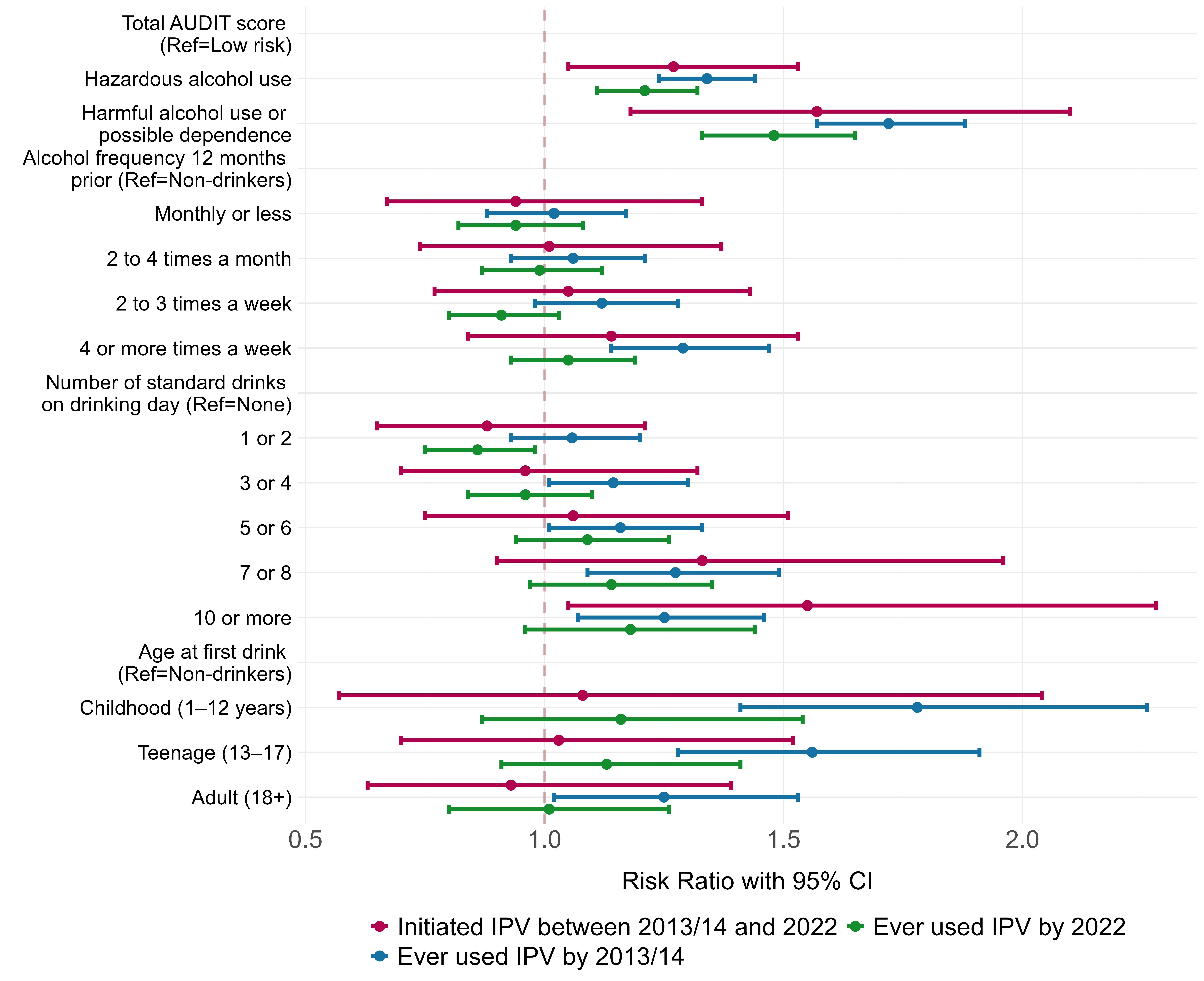
Among men who reported no IPV use in 2013–14 and who also took part in Wave 4, around 14% reported using IPV for the first time during the 9-year follow-up. We found a clear pattern: the higher a man’s total AUDIT score in 2013–14, the higher his risk of initiating IPV by 2022. After adjusting for other factors (confounders), men with hazardous alcohol use (AUDIT 8–15) had a 27% higher risk of initiating IPV than men with low-risk alcohol use (AUDIT <8). Men with harmful alcohol use or possible dependence (AUDIT ≥16) had a 57% higher risk than the low-risk group (see Table 4 and supplementary materials, Tables S4 and S5).
We also found that the risk of initiating IPV between 2013–14 and 2022 increased with the number of standard drinks typically consumed per drinking day. Men who consumed 10 or more drinks on a typical day had a 55% higher risk of initiating IPV over the 9-year period compared to non-drinkers, after adjusting for confounders (see Table 4).
However, there was no evidence that age at first alcoholic drink was associated with initiating IPV between 2013–14 and 2022. Similarly, frequency of alcohol use in the 12 months preceding 2013–14 showed no association with IPV initiation during the follow-up period.
Table 4: The relationship between indicators of alcohol use in 2013–14 and later use of IPV by 2022 in men who reported no use of IPV by 2013–14
| Obs. | Adjusted RR [95% CI] | p value | Overall p value | |
|---|---|---|---|---|
| Age at first drink (ref = Non-drinker) | 0.739 | |||
| Non-drinker | 199 | -- | ||
| Childhood (0–12 years) | 84 | 1.08 [0.57, 2.04] | 0.821 | |
| Teenage (13–17) | 2,179 | 1.03 [0.70, 1.52] | 0.873 | |
| Adult (18+) | 1,296 | 0.93 [0.63, 1.39] | 0.732 | |
| Alcohol frequency in the 12 months preceding Wave 1 survey (ref = Never) | 0.484 | |||
| Never | 350 | -- | ||
| Monthly or less | 548 | 0.94 [0.67, 1.33] | 0.470 | |
| 2 to 4 times a month | 979 | 1.01 [0.74, 1.37] | 0.837 | |
| 2 to 3 times a week | 911 | 1.05 [0.77, 1.43] | 0.736 | |
| 4 or more times a week | 989 | 1.14 [0.84, 1.53] | 0.491 | |
| Number standard drinks typically consumed when drinking Wave 1 (ref = Never) | 0.008 | |||
| Never | 350 | -- | ||
| 1 or 2 | 1,417 | 0.88 [0.65, 1.21] | 0.437 | |
| 3 or 4 | 1,094 | 0.96 [0.70, 1.32] | 0.820 | |
| 5 or 6 | 428 | 1.06 [0.75, 1.51] | 0.743 | |
| 7 or 8 | 201 | 1.33 [0.90, 1.96] | 0.149 | |
| 10 or more | 160 | 1.55 [1.05, 2.28] | 0.026 | |
| AUDIT score during Wave 1 (ref = Low risk) | 0.003 | |||
| Low risk | 2,529 | -- | ||
| Hazardous alcohol use | 851 | 1.27 [1.05, 1.53] | 0.015 | |
| Harmful alcohol use or possible dependence | 198 | 1.57 [1.18, 2.10] | 0.002 |
Notes: Adjusted for age, marital status, employment, educational status, financial stress, remoteness, Socio-Economic Indexes for Areas (SEIFA) Index of Relative Socio-economic Disadvantage (IRSD), sexuality, depression, anxiety, suicidal behaviours, drug use and social support. The frequency shown for each exposure reflects cases where neither the exposure nor any confounders are missing and, as a result, subtotals for each category may vary.
Source: Ten to Men Waves 1 and 4
Alcohol use and lifetime use of IPV
This section examines a cross-sectional association between alcohol use and any use of IPV, first by 2013–14, then by 2022. This corresponds to research question 1b.
By 2013–14
In 2013–14, among men who answered the IPV questions, nearly 1 in 4 (24%) reported that they had ever used IPV. Men with higher AUDIT scores were more likely to report ever using IPV (Figure 1). After adjusting for other factors (confounders) listed in the methods, men with hazardous alcohol use had a 34% higher risk of ever using IPV than men in the low-risk group, and men with harmful alcohol use or possible dependence had a 72% higher risk.
Ever using IPV by 2013–14 was also associated with both drinking frequency and the number of drinks consumed on a typical drinking day, after accounting for other factors. Compared to non-drinkers, men who drank 4 or more times per week had a 29% higher risk of ever using IPV, while those who consumed 7–8 standard drinks on a typical drinking day had a 27% higher risk.
Men who first consumed alcohol as a child (0–12 years) had a 78% higher risk of ever using IPV compared to non-drinkers. Those who first drank alcohol as a teen (13–17 years) had a 56% higher risk of ever using IPV by 2013–14 (see supplementary materials, Tables S6 and S7).
By 2022
By 2022, the proportion of men reporting they had ever used IPV was higher than in 2013–14: just over one-third (36%) of Wave 4 participants reported ever using IPV. We saw a similar pattern to 2013–14: men with higher AUDIT scores in 2022 were more likely to report ever using IPV. Compared with men in the low-risk category, men with hazardous alcohol use had a 21% higher risk of ever using IPV by 2022, and men with harmful alcohol use or possible dependence had a 48% higher risk (see Figure 1 and supplementary materials, Tables S8 and S9).
Sensitivity analyses
The sensitivity analyses told a similar story to the main results. When we excluded sexual abuse from the Wave 1 outcome to make it comparable with Wave 4, the alcohol–IPV estimates changed very little in the longitudinal analysis and in both cross-sectional analyses (see supplementary materials, Tables S21–S23). However, when we focused on physical violence only, the link with alcohol use – especially harmful alcohol use or possible dependence – was stronger than when we used the broader ‘any IPV’ outcome.
In Wave 1, 8% of men reported ever using physical violence, 2% reported ever using sexual abuse, and 9% reported physical and/or sexual IPV. These were all lower than emotional-type abuse (21%). Alcohol-related risk showed a stronger association with physical and/or sexual IPV than with ‘any IPV’. For example, harmful alcohol use or possible dependence was associated with physical and/or sexual IPV with an RR of 2.40 (95% CI [2.03, 2.85]), compared with an RR of 1.72 (95% CI [1.57, 1.88]) for ‘any IPV’ (see supplementary materials, Table S6).
We also looked at alcohol use in relation to each IPV type separately (physical violence, emotional-type abuse and sexual abuse). The results for emotional-type abuse were almost the same as the main ‘any IPV’ results (RR = 1.55; 95% CI: 1.32, 1.81), so we do not report them in full. Results for sexual abuse were also strong (RR = 2.86; 95% CI: 1.90, 4.31) and closely matched the findings for physical IPV and for the combined physical and/or sexual outcome, so they are not shown separately.
When we repeated the longitudinal analysis using physical violence initiation (rather than any IPV) as the outcome, the alcohol associations were stronger. Compared with men in the low-risk drinking group, the risk of starting to use physical violence between 2013–14 and 2022 was 55% higher for men in the hazardous alcohol use category and more than 119% higher for men with harmful alcohol use or possible dependence (see supplementary materials, Tables S24–S26). This is substantially higher than the increase in risk for initiating ‘any IPV’, suggesting that hazardous and harmful drinking patterns are more strongly linked to physical aggression than to the other IPV behaviours measured here.9
Summary of alcohol results
Taken together, these results show a consistent link between alcohol risk and IPV use among men over time. Across all 3 analyses, men in the hazardous and harmful/probable dependence AUDIT groups were more likely to report IPV use, including initiating IPV over time and reporting ever having used IPV at each time point (see Figure 1).
However, some differences emerge for the other alcohol measures. For example, age at first drink and drinking frequency were significantly associated with lifetime use of IPV by 2013–14 but not for initiating IPV between 2013–14 and 2022 or lifetime use by 2022.
Overall, the findings suggest that while certain alcohol-related behaviours may be more relevant to the risk of IPV use in 2013–14, total AUDIT scores – particularly the hazardous and harmful/probable dependence groups – were the most consistent alcohol measure associated with IPV use across time points.
Figure 1: Association between alcohol-related factors and IPV use
Note: Adjusted for age, marital status, employment, educational status, financial stress, remoteness, SEIFA IRSD, sexuality, depression, anxiety, suicidal behaviours, drug use and social support.
Source: Ten to Men Waves 1 and 4
Self-reported masculinities and intimate partner violence
Self-reported masculinities and later initiation of IPV
The analyses reported in this section include men who had not reported ever using IPV by 2013–14, had valid answers to self-reported masculinities measures and other relevant variables in 2013–14 and responded to the IPV use questions in 2022. This reflects associations with starting to use IPV over the 9-year period and addresses research question 2a.
The overall CMNI score was not associated with starting to use IPV between 2013–14 and 2022. This was true whether it was analysed as a continuous score or grouped into tertiles10 (see Table 5 and supplementary materials, Table S10).
Some individual CMNI domains were associated with IPV initiation. Men with higher scores in playboy, violence and risk taking were more likely to report starting to use IPV by 2022. In contrast, men with higher scores in emotional control were less likely to start using IPV over the follow-up period (see Table 5 and supplementary materials, Tables S10–S12).
Two of the 4 PCA components were associated with IPV initiation (see Table 5). Men with higher scores on PC2-long had a 9% higher risk of starting to use IPV by 2022 (RR = 1.09, 95% CI = [1.01, 1.17], p value = 0.019). This component reflected higher scores on the CMNI pursuit (of status) domain and lower scores on emotional control and help (self-reliance) (see supplementary materials, Tables S10–S12 and Figures S3–S5).
For ease of interpretation, PC2-long can be thought of as a combination of stronger status-seeking with lower emotional control/self-reliance. As with all PCA results, it summarises patterns across several domains and should be interpreted cautiously (see supplementary materials for details).
Men with higher scores on PC3-long had a 13% higher risk of starting to use IPV by 2022 (RR = 1.13, 95% CI = [1.05, 1.12]). This component reflected higher scores on the CMNI violence, risk taking and playboy domains and lower scores on primacy (of work). In simple terms, it can be described as a ‘risk over responsibility’ pattern (see supplementary materials, Tables S10–S12 and Figures S3–S5).
These results suggest that self-reported masculinity was not a single ‘overall’ predictor of IPV initiation but some specific norms and profiles were linked to starting IPV over time; particularly domains related to aggression, risk taking and sexual permissiveness, and patterns combining status seeking with lower emotional control (see Table 5 and supplementary materials, Tables S10–S12).
These findings suggest that men who strongly conform to the domains related to status seeking, aggression, risk taking and sexual permissiveness were more likely to report initiating IPV between 2013–14 and 2022. In contrast, stronger endorsement of self-reported masculinities emphasising emotional openness, self-reliance and prioritisation of work or study, were associated with a lower likelihood of starting IPV use by 2022.
Sensitivity analyses were broadly consistent with the main initiation results. Using physical and/or emotional-type IPV by 2022 as outcomes, the total CMNI score was still not associated with IPV initiation but some domains (including violence and risk taking) and the PC2-long and PC3-long components still showed associations of a similar size (see supplementary materials for full results).
When we focused on initiation of physical IPV only by 2022, no CMNI measures (total score, domains or PCA components) were associated with starting physical IPV. This null finding may reflect limited statistical power due to the low occurrence of physical IPV initiation (around 3%), resulting in imprecise estimates (see tables in the ‘Sensitivity analyses’ section of the supplementary materials).
Table 5: The relationship between indicators of self-reported masculinities in 2013–14 and later use of IPV by 2022 in men who reported no use of IPV by 2013–14
| Reported incidence of using IPV by W4 | ||||
|---|---|---|---|---|
| Obs. | Adjusted RR [95% CI] | p value | Overall p value | |
| CMNI score (continuous) | ||||
| CMNI score | 3,349 | 1.03 [0.92, 1.16] | 0.559 | |
| CMNI score categorical (ref = Tertile 1) | 0.060 | |||
| Tertile 1 | 1,363 | |||
| Tertile 2 | 1,275 | 0.94 [0.78, 1.15] | 0.568 | |
| Tertile 3 | 711 | 1.09 [0.87, 1.35] | 0.457 | |
| Individual CMNI masculinity domain | ||||
| Primacy | 3,349 | 0.99 [0.92, 1.07] | 0.830 | |
| Dominance | 3,349 | 1.02 [0.94, 1.10] | 0.614 | |
| Heterosexual | 3,349 | 0.97 [0.92, 1.03] | 0.284 | |
| Women | 3,349 | 0.98 [0.89, 1.07] | 0.651 | |
| Emotional control | 3,349 | 0.92 [0.86, 0.98] | 0.011 | |
| Playboy | 3,349 | 1.08 [1.01, 1.15] | 0.018 | |
| Violence | 3,349 | 1.09 [1.02, 1.15] | 0.005 | |
| Pursuit | 3,349 | 1.07 [0.98, 1.17] | 0.131 | |
| Help | 3,349 | 0.98 [0.91, 1.07] | 0.704 | |
| Risk taking | 3,349 | 1.10 [1.02, 1.18] | 0.010 | |
| Winning | 3,349 | 1.04 [0.96, 1.12] | 0.391 | |
| Principal components | ||||
| PC1 | 3,349 | 1.05 [0.99, 1.11] | 0.074 | |
| PC2 | 3,349 | 1.09 [1.01, 1.17] | 0.019 | |
| PC3 | 3,349 | 1.13 [1.05, 1.22] | 0.001 | |
| PC4 | 3,349 | 1.00 [0.92, 1.09] | 0.929 | |
Notes: Adjusted for age, marital status, employment, educational status, financial stress, remoteness, SEIFA IRSD, sexuality, depression, anxiety, suicidal behaviours, drug use and social support.
Source: Ten to Men Waves 1 and 4
Self-reported masculinities and lifetime use of IPV
This section examines cross-sectional associations between masculinities and ever having used IPV, first in 2013–14 (Wave 1) and then in 2022 (Wave 4). This corresponds to research question 2b.
By 2013–14
In 2013–14, higher total CMNI scores were linked to a higher likelihood of ever having used IPV by that time. Each one-point increase in masculine norm adherence (CMNI score) was associated with a 2% higher risk of ever using IPV. Compared with men in the lowest CMNI tertile, men in the highest tertile had a 26% higher risk of ever using IPV, and men in the middle tertile had a 13% higher risk.
Looking at CMNI domains one at a time (while adjusting for socio-demographic factors), higher scores were associated with a higher likelihood of ever having used IPV by 2013–14 for: dominance (8% higher risk), (power over) women (10%), playboy (6%), violence (13%), pursuit (of status) (6%), help or self-reliance (3%), and risk taking (7%). Higher scores on primacy (of work) were associated with a 5% lower risk of ever using IPV by 2013–14.
In a separate Wave 1 cross-sectional PCA analysis, 3 of the 4 components were associated with ever having used IPV by 2013–14. Higher scores on PC1-W1 were associated with a 9% higher risk of ever using IPV (95% CI = [7%, 12%]). This component was most strongly related to the CMNI dominance, winning and (power over) women domains.
Higher scores on PC3-W1 were associated with a 14% higher risk of ever using IPV by 2013–14 (95% CI = [11%, 17%]). This component reflected higher scores on violence and risk taking and lower scores on heterosexual identity and primacy (of work) (see supplementary materials, Tables S13 and S15).
Higher scores on PC4-W1 were associated with a 7% higher risk of ever using IPV by 2013–14 (95% CI = [4%, 10%]). This component was most strongly related to higher (power over) women and heterosexual (disdain for homosexuals) scores, and lower emotional control and help (self-reliance) scores (see supplementary materials, Tables S13–S15 and Figures S6–S8).
By 2022
In 2022 (Wave 4), self-reported masculinities were measured using the Traditional Masculinity-Femininity (TMF) scale. Unlike the Wave 1 CMNI results, there was no evidence that overall TMF scores were associated with ever having used IPV by 2022 (whether analysed as numeric scores or grouped into categories). Of the TMF domains, only appearance was associated with IPV: each one-point increase in this score was linked to a 4% higher risk of ever having used IPV, after adjusting for other factors.
We also examined PCA-based TMF combinations. Two components were associated with ever having used IPV by 2022: PC2-W4 (6% higher risk per one-unit increase in the PC2-W4 score) and PC3-W4 (8% higher risk per one-unit increase in the PC3-W4 score).
- PC2-W4 was most strongly related to higher TMF consider and ideals scores and lower attitudes scores. This component reflects a masculinity profile where men see themselves as masculine and aspire to be masculine but do not strongly endorse traditional masculine attitudes and beliefs. In other words, men who identify with and idealise masculinity without fully adopting traditional masculine norms may be at increased risk of using IPV.
- PC3-W4 was most strongly related to higher TMF appearance scores and lower ideals scores. This suggests a masculinity profile that places greater emphasis on outward appearance while placing less importance on aspirational or idealised views of masculinity.
Further details on the full results are provided in supplementary materials, Tables S16–S18 and Figure S9.
Sensitivity analyses
The sensitivity analyses were broadly consistent with the main (any IPV) results. When we used physical and/or emotional-type IPV as the outcome, the overall pattern of associations for CMNI (Wave 1) and TMF (Wave 4) changed very little.
In Wave 1, the association between the first CMNI PCA component (PC1-W1) and physical violence and/or sexual abuse was stronger (RR = 1.23; 95% CI [1.17, 1.28]) than its association with any IPV (RR = 1.09; 95% CI [1.07, 1.12]).
When we focused on physical IPV outcomes, the CMNI help (or self-reliance) domain was not associated with physical IPV use by 2013–14; however, the fourth Wave 1 component (PC4-W1) – characterised by low help (self-reliance) and emotional control scores and high (power over) women scores – was linked to a 13% higher prevalence of physical IPV use (see tables in the ‘Sensitivity analyses’ section in the supplementary materials). This component reflects a masculinity profile where men are less self-reliant, express emotions without restraint and place an emphasis on dominance over women and may have contributed to a higher likelihood of using physical IPV by 2013–14.
Full results for emotional-type abuse were almost identical to the main findings (RR = 1.08; 95% CI [1.05, 1.10]) and are not reported. Results for physical and/or sexual IPV (RR = 1.23; 95% CI [1.17, 1.28]) were slightly different to those for physical IPV alone (RR = 1.21; 95% CI [1.16, 1.27]) and are not shown in full.
In Wave 4, sensitivity analyses using physical and/or emotional-type IPV as the outcome showed similar patterns as the main TMF results (see Table S33 in the supplementary materials). Variants of TMF scores did not show associations with IPV use prevalence by 2022, and the components linked with TMF consider, ideals and appearance still showed elevated risk.
When we focused on physical IPV only, men with higher scores on the fourth Wave 4 component (PC4-W4) had a 25% lower risk of using physical IPV. This component was most strongly related to higher TMF interests scores and lower behaviour scores (see tables in the ‘Sensitivity analyses’ section in the supplementary materials for full results). This component describes men whose interests are traditionally masculine but behaviours are less traditionally masculine.
Summary of self-reported masculinities results
Taken together, the findings show that self-reported masculinity is multi-dimensional in its relationship with IPV. Broad, overall masculinity-related scores were not consistently associated with IPV but some specific domains and combinations were (see Figure 2).
Across the 3 analyses, the clearest associations were in the Wave 1 (2013–14) cross-sectional results: total CMNI score and many CMNI domains were associated with having ever used IPV by 2013–14. In contrast, in the longitudinal analysis of initiating IPV among men with no prior IPV use (n = 3,349), the total CMNI score was not associated with initiation, although a smaller set of domains (notably violence, playboy, risk taking, and lower emotional control) and some PCA combinations were associated. In Wave 4 (2022) cross-sectional results (n = 4,786), TMF measures showed little evidence of association overall, apart from small associations for the appearance domain and some PCA-derived TMF components.
Looking across measures, domains related to aggression and risk were most consistently linked to IPV (for CMNI, this included violence, risk taking, and playboy). Domains that reflect greater emotional restraint (emotional control) and greater emphasis on work/study (primacy of work) tended to show lower IPV risk in some analyses. These patterns were clearer when using domain scores or PCA-derived combinations than when using broad total scores.
Differences between the longitudinal and cross-sectional findings likely reflect the different questions being answered (starting IPV among men with no prior IPV versus ever having used IPV at any time in the past), as well as differences in how self-reported masculinities were measured across waves (CMNI in 2013–14; TMF in 2022). Overall, these results suggest that, for prevention, specific masculinity-related attitudes and behaviour patterns may be more informative than broad overall self-reported masculinities scores, while recognising that these analyses describe associations and do not establish causality.
Figure 2: Association between self-reported masculinities and IPV use
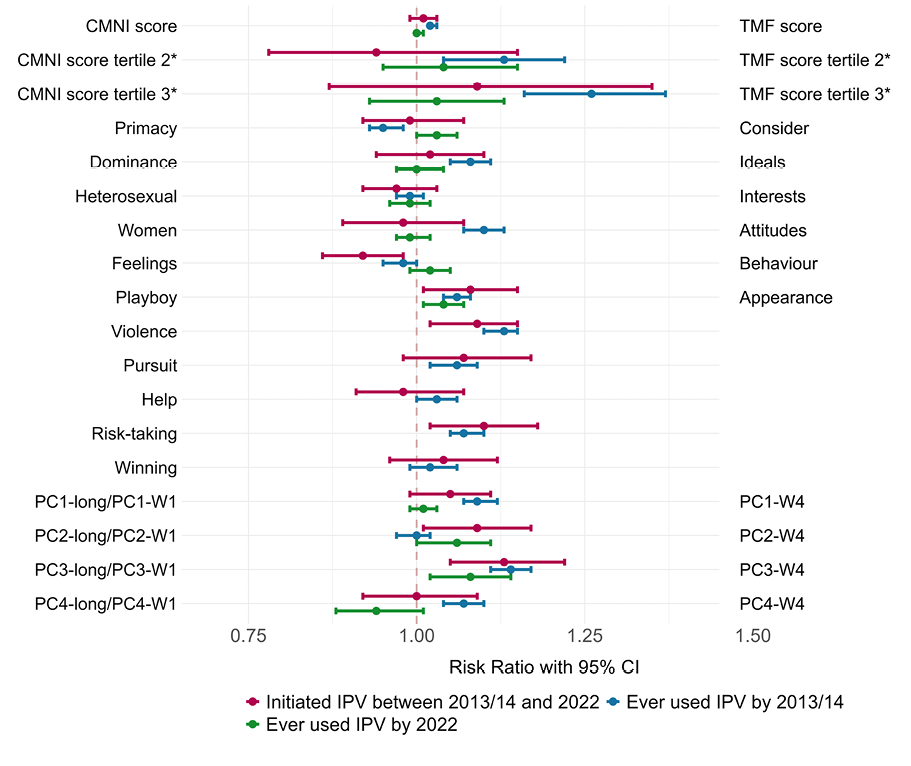
Notes: *The reference group is tertile 1; in other words, the estimates for CMNI score tertile 2 is when compared to tertile 1, etc. The left-hand-side variables are used in the longitudinal analysis and cross-sectional analysis at 2013–14 (corresponding to red and blue estimates), the right-hand-side variables are used in the cross-sectional analysis at 2022 (corresponding to green estimates).
Interaction between alcohol use and self-reported masculinities and use of intimate partner violence
We conducted additional analyses to examine how alcohol-related risk and self-reported masculinities operated together in relation to IPV use. Specifically, we assessed whether the association between alcohol use and IPV differed across levels of self-reported masculinities (effect modification) and whether men with both higher-risk alcohol use and stronger self-reported masculinities had higher risk of IPV use than men exposed to either factor alone (joint effects). These analyses were undertaken for the longitudinal analyses of initiating IPV between 2013–14 and 2022, and for cross-sectional analyses of ever having used IPV by 2013–14 and by 2022.
Initiating IPV between 2013–14 and 2022
Effect modification
There was little evidence that conformity to traditional masculine norms (CMNI) modified the association between alcohol risk and subsequent IPV initiation. Interaction tests using CMNI tertiles did not show any meaningful differences in the alcohol–IPV association across masculinity norm levels (see supplementary Table S37).
Joint effects
Joint-effects analyses showed the highest observed risk of initiating IPV among men who had both harmful alcohol use or probable dependence and high conformity to masculine norms (CMNI tertile 3). Compared with low-risk drinkers with low CMNI, men in this combined group had a 72% higher risk of initiating IPV. For context, harmful alcohol use alone was associated with a 57% higher risk, and CMNI tertiles were not associated with IPV initiation when examined on their own. This suggests that adding high CMNI to harmful drinking is linked to, at most, a modest additional increase in risk (see Figure 3 and supplementary Table S38).
Figure 3: Association between conformity to masculine norms (CMNI tertiles) at Wave 1 and initiation of IPV between 2013–14 and 2022, by level of alcohol use
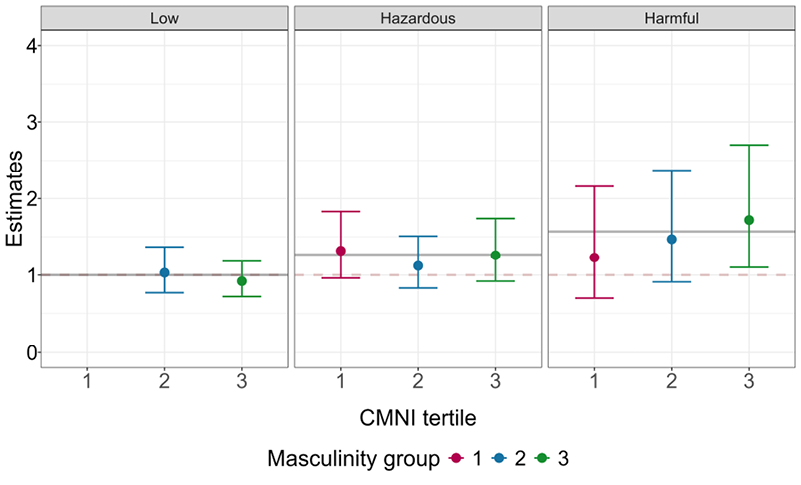
Notes: The dashed horizontal line indicates a risk ratio of 1, representing no difference in risk across CMNI tertile and alcohol use. Solid horizontal lines show the estimated effects of alcohol use when examined independently of CMNI. Different colours are used to distinguish between CMNI tertiles.
Looking beyond overall CMNI tertiles, the joint-effects patterns were clearer for some specific masculinity profiles. Among men with higher alcohol risk, higher IPV initiation risk was most evident for PC2-long and PC3-long (see Table 6 and supplementary Table S39).
PC2-long reflects a pattern of stronger status-seeking with lower emotional control, and PC3-long reflects higher risk taking, aggression and sexual permissiveness (playboy) alongside lower primacy of work. Similar (though weaker) patterns were also seen for individual CMNI domains related to power over women, self-reliance and winning, while the overall CMNI score showed less differentiation (see Table 6 and supplementary Table S39).
Table 6: Risk of initiating IPV between 2013–14 and 2022 per 1 unit increase in CMNI principal components across different alcohol risk categories
| Low-risk drinkers | Increasing-risk drinkers | Higher risk/possible dependence | ||||
|---|---|---|---|---|---|---|
| PC (per 1 unit increase) | RR [95% CI] | p value | RR [95% CI] | p value | RR [95% CI] | p value |
| PC1-long | 1.06 [0.99, 1.14] | 0.093 | 1.01 [0.89, 1.14] | 0.888 | 1.17 [0.99, 1.37] | 0.062 |
| PC2-long | 1.12 [1.03, 1.22] | 0.006 | 0.95 [0.80, 1.12] | 0.527 | 1.23 [1.01, 1.50] | 0.041 |
| PC3-long | 1.08 [0.98, 1.18] | 0.116 | 1.16 [1.00, 1.35] | 0.050 | 1.42 [1.14, 1.78] | 0.002 |
| PC4-long | 1.06 [1.01, 1.10] | 0.009 | 1.08 [0.99, 1.19] | 0.602 | 1.14 [1.00, 1.30] | 0.090 |
Ever used IPV by 2013–14
Effect modification
There was little evidence that conformity to masculine norms changed the strength of the association between alcohol-related risk and ever having used IPV by 2013–14. In models with alcohol × CMNI interaction terms, the alcohol–IPV association was broadly similar across CMNI levels. Alcohol risk and CMNI tertiles were each associated with ever having used IPV but there was no evidence of effect modification (see supplementary Table S40).
Joint effects
Joint-effects models showed a graded pattern: IPV use increased as alcohol risk increased, and it also increased slightly with higher CMNI. However, among men with harmful or dependent drinking, IPV use was similarly elevated across all CMNI tertiles. This suggests that, at the highest alcohol risk levels, alcohol-related harm was the main factor linked to higher IPV prevalence, with CMNI adding only a small difference (see supplementary Table S41).
When we used CMNI domains and PCA components (rather than overall CMNI tertiles), differences between self-reported masculinities were clearer. Even so, the combined patterns still pointed to alcohol-related risk as the strongest factor associated with ever having used IPV by 2013–14 (see supplementary Tables S42–S43).
Ever used IPV by 2022
Effect modification
There was little evidence that TMF-based masculinity measures capturing gender self-identify changed the strength of the association between alcohol-related risk and ever having used IPV by 2022. Interaction tests did not indicate meaningful differences in the alcohol–IPV association across TMF levels (see supplementary Table S44).
Joint effects
Joint-effects analyses showed a similar pattern to earlier results: IPV prevalence increased as alcohol-related risk increased within each TMF tertile. Differences between TMF tertiles were small. Overall, this suggests that alcohol-related risk was the main factor associated with higher IPV prevalence in 2022, with TMF adding little additional separation between groups (see supplementary Table S45).
In Table 7, most TMF domains showed small increases in the risk of ever having used IPV as alcohol risk increased. The associations were not uniform across domains – some domains were statistically significant in one alcohol-risk group but not the other – however, the overall pattern was generally positive and modest (see Table 7 and supplementary Tables S46–S47).
Table 7: Risk of ever used IPV by 2022 per 1 unit increase in TMF domains across different alcohol risk categories
| TMF domain (per 1 unit increase) | Alcohol: Increasing risk | Alcohol: Higher risk/possible dependence | ||
|---|---|---|---|---|
| RR [95% CI] | p value | RR [95% CI] | p value | |
| Consider | 1.07 [1.03, 1.12] | 0.001 | 1.11 [1.06, 1.16] | <0.001 |
| Ideals | 1.04 [0.99, 1.09] | 0.103 | 1.07 [1.02, 1.12] | 0.008 |
| Interests | 1.03 [0.99, 1.07] | 0.187 | 1.06 [1.01, 1.11] | 0.011 |
| Attitudes/beliefs | 1.04 [1.00, 1.09] | 0.029 | 1.07 [1.02, 1.12] | 0.002 |
| Behaviour | 1.06 [1.02, 1.10] | 0.007 | 1.09 [1.04, 1.14] | <0.001 |
| Appearance | 1.07 [1.03, 1.12] | 0.001 | 1.10 [1.05, 1.16] | <0.001 |
Summary of interaction results
Overall, we found little evidence that the link between alcohol-related risk and IPV use differed across levels of self-reported masculinities. In the longitudinal analysis of IPV initiation and in the cross-sectional analyses at 2013–14 and 2022, the alcohol–IPV association was broadly similar regardless of self-reported masculinities level.
Joint-effects analyses compare groups defined by both alcohol risk and self-reported masculinities, to see which combinations have the highest observed IPV risk. In the Wave 1 CMNI analyses, the highest-risk group tended to be men with harmful alcohol use or possible dependence and higher CMNI, although the increase compared with high alcohol risk alone was modest (so this does not, on its own, show an interaction effect). In 2022, grouping men into low/medium/high TMF (tertiles) did not clearly distinguish IPV risk within alcohol-risk groups; however, when TMF was broken down into its individual domains, most domains showed small, generally positive associations with IPV.
Summary
This study aimed to better understand how alcohol use and self-reported masculinities are linked to IPV use in Australia. By looking at data obtained from the same men at different time points and over time, we provide new evidence about how these factors are associated with men’s use of IPV. The findings can inform intervention and prevention work by identifying which alcohol-related behaviours and which specific masculine norms and attitudes are most consistently associated with higher risk of IPV use by men.
The link between intimate partner violence and alcohol use
This study provides new evidence – using both over-time (longitudinal) and snapshot (cross-sectional) analyses – on the relationship between alcohol use and men’s reported use of IPV in Australia.
Over 9 years, higher-risk drinking patterns – measured by higher AUDIT scores (hazardous use, and harmful use or possible dependence) – were associated with both initiating IPV over time and reporting ever having used IPV. Heavier typical drinking (more standard drinks per occasion) was also linked to higher IPV risk. These findings align with previous research showing that heavier or riskier drinking is strongly associated with IPV (Cafferky et al., 2018; Leonard & Quigley, 2017), including prior cross-sectional studies (Caetano et al., 2004).
Our study also shows differences across alcohol indicators and IPV definitions. While age at first alcoholic drink and drinking frequency were associated with lifetime IPV use by 2013–14, these associations were not observed in 2022 and did not predict starting to use IPV over time. These differences may reflect changes in which alcohol measures best identify higher-risk groups over time, as well as differences in who took part in each wave and the outcome being measured (new onset vs lifetime use). Overall, the results suggest that current patterns and severity of alcohol use may be more informative than historical drinking behaviours when assessing IPV risk.
Supporting this, a systematic review found limited and inconsistent evidence that earlier age of first drink leads to harmful alcohol use in adulthood (Maimaris & McCambridge, 2014). Cross-cultural research has also shown that age of habitual use is more strongly associated with problematic alcohol use and AUDIT scores than age of first use, suggesting that regular drinking patterns may be more predictive of harmful outcomes (Chentsova et al., 2024). Furthermore, harmful alcohol use is a well-established risk factor for IPV use (Cafferky et al., 2018; Curtis et al., 2019; Laslett et al., 2021).
Our study found that hazardous and harmful alcohol use were strongly associated with men’s reported use of physical IPV. While fewer men reported using physical violence than emotional-type abuse, the relative increase in risk associated with higher-risk alcohol use was larger for physical IPV. This suggests that heavy drinking and alcohol dependence are more strongly linked to physical aggression than to other measured IPV behaviours in this study (i.e. emotional-type and sexual IPV). These findings are consistent with previous research showing that alcohol misuse is a particularly robust predictor of physical IPV use (Cafferky et al., 2018; Leonard & Quigley, 2017; Stith et al., 2004).
IPV is a population health issue (WHO, 2013). The findings from this study highlight the importance of prioritising hazardous and harmful drinking as a modifiable risk factor in IPV prevention strategies. The strong and consistent associations between high AUDIT scores and the initiation of IPV, with higher scores linked to greater risks observed in both longitudinal and cross-sectional analyses, highlight the importance of early identification and intervention among medium- and high-risk drinkers. These insights support the expansion of alcohol interventions and referral pathways within primary care, mental health and community services as part of a broader IPV prevention framework (Haber et al., 2021; Jayaraj et al., 2013).
At the systems level, these findings suggest that historical drinking behaviours (such as age at first drink and past-year frequency), while important for understanding context and longer-term risk, were less informative for predicting new IPV use than current, behaviour-based indicators.
Recent Australian research highlights the importance of integrated screening and risk assessment practices across services that frequently engage with men who may use IPV, including alcohol and other drug, mental health and child protection services (Meyer et al., 2023).
The link between intimate partner violence and self-reported masculinities
This study examined how self-reported masculinities relate to different measures of men’s use of IPV. Overall, the findings suggest that self-reported masculinities are multi-dimensional: broad, overall scores were not consistently associated with IPV use but some specific domains and patterns were.
In the longitudinal analyses, the total CMNI score at 2013–14 was not associated with IPV initiation by 2022, although some CMNI domains (e.g. playboy, violence and risk taking) and some PCA-derived CMNI profiles were associated with initiating IPV. In the cross-sectional analyses, total CMNI score and many CMNI domains were associated with having ever used IPV by 2013–14, whereas TMF measures at 2022 showed no association with the prevalence of IPV use overall, apart from small associations for the appearance domain and some PCA-derived TMF components.
Data from 2013–14 showed a clear link between higher CMNI scores and an increased likelihood of having ever used IPV. This pattern was not seen for IPV initiation over time, suggesting that overall CMNI may be more closely related to having ever used IPV than to starting IPV among men who reported no prior history of IPV use.
A 2018 systematic review of the association between self-reported masculinities and IPV (McCarthy et al., 2018) found that less than half of the general masculinities measures included were associated with IPV behaviours. However, this analysis did not include any studies that had used the CMNI scale and was largely limited to cross-sectional evidence. Our findings of limited cross-sectional associations and no association for longitudinal effects align with the broader evidence base.
Importantly, these findings suggest that masculinities measures (such as total CMNI score) may be more useful for identifying men who have already used IPV but less effective in predicting future use among men who have no prior history of IPV use. This underscores the value of prevention and early intervention approaches that focus on real-world behaviours and contexts and that build on men’s positive qualities rather than relying solely on overall masculinities scores.
In this study, the overall TMF score was not associated with IPV use by 2022. This may be partly explained by differences in what the measures capture: the TMF scale reflects broad, subjective self-perceptions of masculinity–femininity, while the CMNI provides a domain-based structure that distinguishes between specific norms and attitudes. In this report, the CMNI domains and CMNI-derived profiles were more informative for identifying which aspects of self-reported masculinities were linked to IPV.
Looking at multiple masculinity domains shows specific combinations were linked to increased risk of IPV use. For the CMNI measures, these included: dominance, winning and power over women (reflecting power over others), primacy of work and pursuit of status (reflecting ambition and responsibility) and violence and risk taking (reflecting aggressive and impulsive behaviours).
The results related to masculinity domains are consistent with previous research. The associations with violence and anger have been reported previously, with about 56% of measures related to acceptance of violence associated with the use of IPV and similar associations with risk taking (which includes risky alcohol use) (McCarthy et al., 2018).
Definitions of IPV in research vary considerably. These analyses have used a single outcome measure for each time point, derived by combining answers to questions adapted from the COHSAR instrument about whether any emotional-type, physical or sexual abuse behaviours were used. Many studies included in the systematic review that focused on self-reported masculinities (McCarthy et al., 2018) also considered ‘any’ use of IPV.
In the review by McCarthy and colleagues (2018), there were insufficient data to stratify by both type of violence and masculinity scale, so the authors assumed the use of different types of IPV was related. For example, they assumed that results observed for physical violence would also apply to emotional abuse, and summarised results accordingly. However, Spencer and colleagues (2024) reviewed associations of mental and physical ill-health and showed that anger and emotional dysregulation were cross-sectionally associated with the use of emotional IPV, providing further evidence that the type of IPV is an important consideration.
Results may also have varied due to different time scales for reporting. Most studies appear to have used the last year but some have asked about the last 3 months, or lifetime use (McCarthy et al., 2018; Verma et al., 2008). Our longitudinal approach, focusing on following up men who had initially reported never using IPV, avoids the need to specify a time frame, which is a key advantage.
Interaction between alcohol and self-reported masculinities
This study also examined how alcohol use and self-reported masculinities operate together in relation to IPV use. Overall, there was little evidence that self-reported masculinities – as measured in this report – substantially changed the strength of the alcohol–IPV association across the analyses. Joint-effects analyses did identify combined alcohol-and-masculinities groups with the highest observed IPV risk (e.g. harmful alcohol use or possible dependence alongside higher CMNI) but the additional increase compared with high alcohol risk alone was modest and does not, on its own, demonstrate interaction.
The findings indicate that self-reported masculinities is not a consistent or stand-alone predictor of IPV use but appears to be more relevant in contexts of elevated alcohol-related harm. This pattern helps reconcile the mixed evidence observed across previous Australian studies of self-reported masculinities and IPV, where associations vary depending on outcome definition, time frame and population.
International research similarly reports inconsistent interaction effects, with some studies showing that heavy or binge drinking amplifies the association between inequitable specific masculine norms and IPV, while others find limited or context-specific effects (Laslett et al., 2021; Lisco et al., 2015; McCarthy et al., 2018). Taken together, these findings suggest that conformity to some traditional masculinity norms contribute to the risk of IPV use in a conditional and context-dependent way, rather than exerting a uniform influence across all men and circumstances.
Data strengths and limitations
This analysis has several key strengths that support the robustness and policy relevance of the findings.
- This analysis draws on longitudinal data from Ten to Men, a large, nationally representative cohort of Australian men, allowing assessment of IPV use over time rather than at a single point.
- The use of validated measures for alcohol use (AUDIT) and self-reported masculinities (CMNI and TMF) strengthens the reliability and comparability of findings with existing national and international research.
- Longitudinal analyses focused on men with no prior reported IPV use at baseline, enabling examination of factors associated with the initiation of IPV rather than prevalence alone.
- Findings are supported by complementary cross-sectional analyses and sensitivity analyses, which improve robustness and aid interpretation across different IPV definitions and time points.
- The analyses adjust for a wide range of potential confounders measured in Ten to Men and were guided by a causal framework, supporting clearer interpretation of the observed associations.
- Using multiple measures of alcohol use and self-reported masculinities across waves, alongside initiation and prevalence analyses, allows triangulation of results and helps strengthen inference about temporal ordering.
When interpreting and applying these findings there are certain data limitations that should be considered.
- The lack of a standardised approach to how IPV is measured in Australia and globally is a noted limitation (Li et al., 2024). Our research used men’s self-reported use of IPV, which can be limited by issues of misreporting due to recall bias, social desirability and misinterpretation.
- We captured 3 specific types of IPV behaviours, and these cannot be generalised more broadly to all IPV use. Research continues into alternative measures of men’s use of IPV.
- Small numbers of men reporting the use of physical and sexual IPV mean that results are less clear for these types of IPV.
- The lack of a standardised approach to how self-reported masculinities is measured is a limitation. This is a current research focus for multiple Australian sectors and Ten to Men.
- Self-reporting on the masculinities measures in this study may also be influenced by social desirability with potential over-reporting where men think they should have a particular behaviour and under-reporting where they do not.
- Analysis of all combinations of priority population groups (e.g. by Indigenous status, culturally and linguistically diverse background, LGBTQA+ identity or disability) was not feasible due to small sample sizes across Waves 1–4, limiting reliable subgroup-specific estimates.
- The longitudinal (Wave 1 to Wave 4) analyses are based on men who were retained in the study and who completed IPV items at follow-up. Retention differed across some characteristics included in the analyses, including alcohol-related risk, meaning that men with higher levels of risk may be under-represented in the longitudinal findings.
Key implications for policy and practice
Address hazardous alcohol use as a modifiable risk factor
- Men with hazardous or harmful alcohol use or alcohol dependence are at increased risk of initiating and continuing IPV. Policies and practice guidance should prioritise routine alcohol screening and brief intervention/referral pathways in settings that see large numbers of men (e.g. primary care, mental health and community services), alongside clear and safe escalation pathways when concerns about family and domestic violence arise.
- Where alcohol-related risk is identified, services can consider adding targeted enquiries about relationship safety and any history of IPV use (consistent with local protocols and client safety) and offer a warm referral to specialist family violence and behaviour-change supports. Given the limited evidence of interaction in this study, screening for masculinity-related attitudes is likely to be most useful in targeted programs (e.g. men’s behaviour change programs and integrated AOD–FDV pathways) rather than as a universal population screening tool.
Target specific masculinity traits and attitudes linked to risk of IPV use
- Our analysis identified some domains of traditional masculinity norms – violence, risk taking, playboy and dominance – as being associated with men’s risk of IPV use. Interventions should target attitudes and behaviours linked to these domains, with a focus on men with high-risk profiles, to prevent IPV initiation, rather than relying on broad or general measures of self-reported masculinities.
- Drawing on broader evidence, options include behaviour-change programs tailored to high-risk cohorts (Arrigo et al., 2024; Cannon et al., 2025), community campaigns that promote respectful relationships (Niolon et al., 2023; Our Watch, 2021), and integration of these strategies within alcohol and family violence services (Savic et al., 2017; Townsend et al., 2020).
Integrate responses where alcohol use and harmful masculinity norms intersect
- Findings showed little evidence that self-reported masculinities substantially changed the strength of the alcohol–IPV association. Higher-risk drinking was linked to IPV across self-reported masculinities levels, and the combined highest-risk group (high alcohol risk plus higher CMNI) showed, at most, a modest additional increase in observed risk. In practice, this supports prioritising alcohol harm reduction as a core prevention lever, while integrating targeted content on specific harmful norms (e.g. acceptance of violence, risk taking and sexual entitlement) for men already identified as higher risk.
- International evidence on whether heavy or binge drinking amplifies the effects of specific masculine norms is mixed, with findings varying by setting and measures (Laslett et al., 2021; Lisco et al., 2015). Taken together with this report’s results, this points to the value of coordinated AOD-FDV pathways (rather than separate, parallel responses): alcohol interventions that include safe identification of family violence risk and referral, and specialist programs that can address both alcohol-related harm and relevant attitudes/behaviours as part of a tailored response.
Strengthen cross-sector collaboration and trauma-informed responses
- Consistent with this report’s finding that alcohol-related risk is strongly associated with IPV initiation and prevalence, strengthening cross-sector collaboration between alcohol and family violence services can support earlier identification, appropriate referral and more integrated responses. Broader evidence also notes the need for services to be trauma-informed and culturally appropriate (Fomiatti et al., 2023; Foundation for Alcohol Research and Education [FARE], 2024; Prevention Collaborative, 2024).
Future IPV research opportunities with Ten to Men data
- Future work could focus on additional factors, some of which are considered as influencing variables in this analysis, such as financial stress.
- Data on pornography use and adverse childhood experiences are available in Wave 5 (released in October 2025). Longitudinal and cross-sectional analyses using these data are likely to be feasible, as are analyses of factors that influence the links between each of these variables and IPV use.
- Coercive control is ‘almost always an underpinning dynamic of family and domestic violence.’ (National Principles to Address Coercive Control in Family and Domestic Violence). Wave 5 includes data asking about certain aspects of coercive control (e.g. economic abuse) and this information can be incorporated in future work.
- Future analyses could assess which other factors (such as age or drug use) influence alcohol use and self-reported masculinities. This has implications for the design of prevention and harm reduction activities, especially cross-sector collaborations.
- More focused causal modelling could be undertaken. For example, self-reported masculinities affect mental health as well as the risk of using IPV, and mental health affects the use of IPV (Bonell et al., 2023; O’Donnell et al., 2025). Assessment of whether self-reported masculinities affect the use of IPV through mental health, or directly, or both will enable improved design of interventions to prevent new and continued use of IPV.
- Further work on specific groups of men such as those identifying as LGBTQA+, living in regional or remote areas, having a disability and other priority populations listed in the National Male Health Strategy is needed. Data from participants in the recent sample top-up are included in Wave 5, providing a much larger sample size for priority populations and making such analyses feasible in many of these groups. Intersectionality has also been recommended as a focus by multiple authors (Broaddus, 2020; Seidler et al., 2024; Subirana-Malaret et al., 2019). Analyses considering these, and other related issues, are likely to be possible from Wave 5, given the larger sample size.
Further details
See the Supplementary Materials for technical details of this research, including descriptions of other measures, detailed results and bibliography.
References
Albright, D. L., Fletcher, K. L., McDaniel, J., Thomas, K. H., Godfrey, K., Grohowski, M. et al. (2019). Intimate partner violence among postsecondary students with military experience. Traumatology, 25(1), 58–65. doi.org/10.1037/trm0000172.
Australian Institute of Health and Welfare (AIHW). (2025). Family, domestic and sexual violence. www.aihw.gov.au/family-domestic-and-sexual-violence/understanding-fdsv/who-uses-violence
Australia’s National Research Organisation for Women’s Safety (ANROWS). (2025). The role of men’s behaviour change programs in addressing men’s use of domestic, family and sexual violence. ANROWS. www.anrows.org.au/publication/the-role-of-mens-behaviour-change-programs-dfsv
Arrigo, J.-L., Taheri, M., Fitzpatrick, S., & McCormack, L. (2024). Domestic violence, behavior change programs, positive and negative outcomes: A scoping review. Psychology of Violence.
Babor, T. F., Higgins-Biddle, J. C., Saunders, J. B., & Monteiro, M. G. (2001). The Alcohol Use Disorders Identification Test: Guidelines for use in primary care. Second edition. World Health Organization. iris.who.int/bitstream/handle/10665/67205/WHO_MSD_MSB_01.6a-eng.pdf?sequence=1
Bonell, S., Trail, K., Seidler, Z., Patel, D., Oliffe, J. L., & Rice, S. M. (2023). “There’s no sewing classes, There’s no bedazzling seminars”: The impact of masculinity on social connectedness and mental health for men living in inner-regional Australia. Sex Roles, 88(1), 52–67.
Borinca, I., & Gkinopoulos, T. (2025). Challenging traditional masculinity: Minority norms and the reimagining of male gender roles. Social Influence, 20(1).
Broaddus, M. (2020). The intersectionality of race, gender, poverty, and intimate partner violence. Indiana Health Law Review, 17, 207.
Caetano, R., Ramisetty-Mikler, S., & McGrath, C. (2004). Acculturation, drinking, and intimate partner violence among Hispanic couples in the United States: A longitudinal study. Hispanic Journal of Behavioral Sciences, 26(1), 60–78.
Cafferky, B. M., Mendez, M., Anderson, J. R., & Stith, S. M. (2018). Substance use and intimate partner violence: A meta-analytic review. Psychology of Violence, 8(1), 110.
Campbell, E., Fernando, T., Gassner APM, L., Hill, J., Seidler, Z., & Summers, A. (2024). Unlocking the Prevention Potential report. Accelerating action to end domestic, family and sexual violence. www.pmc.gov.au/resources/unlocking-the-prevention-potential-executive-summary
Cannon, C. E., Leahy, C., Buttell, F., & Ferreira, R. (2025). Assessing primary prevention programs for intimate partner violence: A review of contemporary approaches. Partner Abuse, 16(2), 235–246.
Chentsova, V. O., Bravo, A. J., Pilatti, A., Pautassi, R. M., Mezquita, L., Hogarth, L. et al. (2024). Age of first use, age of habitual use, and problematic alcohol use: A cross-cultural examination among young adults in seven countries. International Journal of Mental Health and Addiction, 22(5), 2747–2765.
Clare, C. A., Velasquez, G., Martorell, G. M. M., Fernandez, D., Dinh, J., & Montague, A. (2021). Risk factors for male perpetration of intimate partner violence: A review. Aggression and Violent Behavior, 56, 101532.
Curtis, A., Vandenberg, B., Mayshak, R., Coomber, K., Hyder, S., Walker, A. et al. (2019). Alcohol use in family, domestic and other violence: Findings from a cross-sectional survey of the Australian population. Drug and Alcohol Review, 38(4), 349–358.
Department of Social Services (DSS). (2022). National Plan to End Violence against Women and Children 2022–2032. DSS. www.dss.gov.au/system/files/resources/national-plan-end-violence-against-women-and-children-2022-2032.pdf
Department of the Prime Minister and Cabinet (PMC). (2024). Working to end violence against women with rapid review into prevention approaches. PMC. ministers.pmc.gov.au/gallagher/2024/working-end-violence-against-women-rapid-review-prevention-approaches
Dokkedahl, S., Kok, R. N., Murphy, S., Kristensen, T. R., Bech-Hansen, D., & Elklit, A. (2019). The psychological subtype of intimate partner violence and its effect on mental health: Protocol for a systematic review and meta-analysis. Systematic Reviews, 8(1), 198.
Domestic, Family and Sexual Violence Commission (DFSVC). (2025). Men and boys snapshot: Engaging with men and boys to end domestic, family and sexual violence. DFSVC. www.dfsvc.gov.au/sites/default/files/2025-09/DFSVC0020%20MenBoys%28A4_Digital%29_FA2.pdf
Foundation for Alcohol Research and Education (FARE). (2024). National Cabinet called on to adopt expert recommendations on alcohol as part of approach to preventing violence. FARE. fare.org.au/national-cabinet-called-on-to-adopt-expert-recommendations-on-alcohol-as-part-of-approach-to-preventing-violence/
Feingold, A., Washburn, I. J., Tiberio, S. S., & Capaldi, D. M. (2015). Changes in the associations of heavy drinking and drug use with intimate partner violence in early adulthood. Journal of Family Violence, 30(1), 27–34.
Flood, M. (2024). The Man Box 2024: Re-examining what it means to be a man in Australia. Jesuit Social Services.
Flood, M., Brown, C., Dembele, L., & Mills, K. (2022). Who uses domestic, family, and sexual violence, how, and why? The State of Knowledge Report on Violence Perpetration. Queensland University of Technology.
Fomiatti, R., Savic, M., Pienaar, K., Nourse, G., Keane, H., & Treloar, C. (2023). Future research directions for improved responses to trauma and alcohol and other drug-related problems: Report from a national stakeholder consultation. Deakin University.
Fowler, S. L., & Geers, A. L. (2017). Does trait masculinity relate to expressing toughness? The effects of masculinity threat and self-affirmation in college men. Psychology of Men & Masculinity, 18(2), 176.
Gilchrist, G., Hegarty, K., Chondros, P., Herrman, H., & Gunn, J. (2010). The association between intimate partner violence, alcohol and depression in family practice. BMC Family Practice, 11(1), 72.
Haber, P. S., Riordan, B. C., Winter, D. T., Barrett, L., Saunders, J., Hides, L. et al. (2021). New Australian guidelines for the treatment of alcohol problems: An overview of recommendations. Medical Journal of Australia, 215, S3–S32.
Harald, K. (2001). Alcohol and its social consequences: The forgotten dimension. World Health Organization Regional Office for Europe. iris.who.int/bitstream/handle/10665/108554/WHO-EURO-2001-3851-43610-61278-eng.pdf?sequence=1
Hester, M., Donovan, C., & Fahmy, E. (2010). Feminist epistemology and the politics of method: Surveying same sex domestic violence. International Journal of Social Research Methodology, 13(3), 251–263.
Hingson, R. W., Heeren, T., & Winter, M. R. (2006). Age at drinking onset and alcohol dependence: age at onset, duration, and severity. Archives of Paediatrics & Adolescent Medicine, 160(7), 739–746.
Iverson, K. M., Livingston, W. S., & Vogt, D. (2024). Prevalence of sexual violence and intimate partner violence among US military veterans: Findings from surveys with two national samples. Journal of General Internal Medicine, 418–427. doi.org/10.1007/s11606-023-08486-9
Jayaraj, R., Whitty, M., Thomas, M., Kavangh, D., Palmer, D., Thomson, V. et al. (2013). Prevention of Alcohol-Related Crime and Trauma (PACT): Brief interventions in routine care pathway – a study protocol. BMC Public Health, 13(1), 49.
Jewkes, R., Flood, M., & Lang, J. (2015). From work with men and boys to changes of social norms and reduction of inequities in gender relations: A conceptual shift in prevention of violence against women and girls. The Lancet, 385(9977), 1580–1589.
Jolliffe, I. (2011). Principal component analysis. doi.org/10.1007/978-3-642-04898-2_455
Kulak, J. A., Heavey, S. C., Marsack, L. F., & Leonard, K. E. (2025). Alcohol misuse, marital functioning and marital instability: An evidence-based review on intimate partner violence, marital satisfaction and divorce. Substance Abuse and Rehabilitation, 39–53.
Kypri, K., Jones, C., McElduff, P., & Barker, D. (2011). Effects of restricting pub closing times on night-time assaults in an Australian city. Addiction, 106(2), 303–310. doi.org/10.1111/j.1360-0443.2010.03125.x
Laslett, A. M., Graham, K., Wilson, I. M., Kuntsche, S., Fulu, E., Jewkes, R. et al. (2021). Does drinking modify the relationship between men’s gender-inequitable attitudes and their perpetration of intimate partner violence? A meta-analysis of surveys of men from seven countries in the Asia Pacific region. Addiction, 116(12), 3320–3332.
Leonard, K. E., & Quigley, B. M. (2017). Thirty years of research show alcohol to be a cause of intimate partner violence: Future research needs to identify who to treat and how to treat them. Drug and Alcohol Review, 36(1), 7–9.
Li, Y., Wang, G., Chen, J., Xia, Q., Chen, K., Ou, S., & Tang, S. (2024). Evaluation of the measurement properties of intimate partner violence screening instruments for the general population: A COSMIN-based international systematic review. PloS One, 19(11), e0310297.
Lisco, C. G., Leone, R. M., Gallagher, K. E., & Parrott, D. J. (2015). “Demonstrating masculinity” via intimate partner aggression: The moderating effect of heavy episodic drinking. Sex Roles, 73(1), 58–69.
Livingston, M. (2011). A longitudinal analysis of alcohol outlet density and domestic violence. Addiction, 106(5), 919–925. doi.org/10.1111/j.1360-0443.2010.03333.x
Maimaris, W., & McCambridge, J. (2014). Age of first drinking and adult alcohol problems: Systematic review of prospective cohort studies. Journal of Epidemiology and Community Health, 68(3), 268–274.
Mancera, B. M., Dorgo, S., & Provencio-Vasquez, E. (2017). Risk factors for Hispanic male intimate partner violence perpetration. American Journal of Men’s Health, 11(4), 969–983.
McCarthy, K. J., Mehta, R., & Haberland, N. A. (2018). Gender, power, and violence: A systematic review of measures and their association with male perpetration of IPV. PloS One, 13(11), e0207091.
McCarry, M., Hester, M., & Donovan, C. (2008). Researching same sex domestic violence: Constructing a survey methodology. Sociological Research Online, 13(1), 174–187.
Meyer, S., Helps, N., & Fitz-Gibbon, K. (2023). Domestic and family violence perpetrator screening and risk assessment: Current practice and future opportunities. Australian Institute of Criminology.
Neilson, E. C., Singh, R. S., Harper, K. L., & Teng, E. J. (2020). Traditional masculinity ideology, posttraumatic stress disorder (PTSD) symptom severity, and treatment in service members and veterans: A systematic review. Psychology of Men & Masculinities, 21(4), 578.
Nicolaidis, C., & Paranjape, A. (2009). Defining intimate partner violence: Controversies and implications. Intimate partner violence: A health-based perspective, 19–29.
Niolon, P. H., Kearns, M. C., Dills, J., Rambo, K., Irving, S. M., Armstead, T. L. et al. (2023). Intimate partner violence prevention: Resource for action. A compilation of the best available evidence. Centers for Disease Control and Prevention.
Norén, L., Bergström, M., & Wallander, L. (2025). Coming to terms with risk factors for intimate partner violence perpetration: A scoping review. Journal of Evidence-Based Social Work, 1–30.
O’Donnell, K., Woldegiorgis, M., Gasser, C., Scurrah, K., Andersson, C., McKay, H. et al. (2025). The use of intimate partner violence among Australian men. (Ten to Men Insights Report #3). AIFS.
Our Watch. (2021). Change the story: A shared framework for the primary prevention of violence against women in Australia (2nd Ed.). Our Watch. assets.ourwatch.org.au/assets/Key-frameworks/Change-the-story-Our-Watch-AA.pdf
Payne, J., & Morgan, A. (2024). Prevalence of recorded family and domestic violence offending: A birth cohort study. Trends and Issues in Crime and Criminal Justice, 701, 1–18.
Prevention Collaborative. (2024). Addressing harmful alcohol use to reduce intimate partner violence and violence against children in the home. Prevention Collaborative. prevention-collaborative.org/wp-content/uploads/2024/09/Alcohol-Review-FINAL.pdf
Próspero, M. (2008). Effects of masculinity, sex, and control on different types of intimate partner violence perpetration. Journal of Family Violence, 23(7), 639–645.
Reidy, D. E., Berke, D. S., Gentile, B., & Zeichner, A. (2014). Man enough? Masculine discrepancy stress and intimate partner violence. Personality and Individual Differences, 68, 160–164.
Savic, M., Best, D., Manning, V., & Lubman, D. I. (2017). Strategies to facilitate integrated care for people with alcohol and other drug problems: A systematic review. Substance Abuse Treatment, Prevention, and Policy, 12(1), 19.
Seidler, Z. E., Benakovic, R., Wilson, M. J., McGee, M. A., Fisher, K., Smith, J. A. et al. (2024). Approaches to engaging men during primary healthcare encounters: A scoping review. American Journal of Men’s Health, 18(2).
doi.org/10.1177/15579883241241090
Sileo, K. M., Luttinen, R., Muñoz, S., & Hill, T. D. (2022). Mechanisms linking masculine discrepancy stress and the perpetration of intimate partner violence among men in the United States. American Journal of Men’s Health, 16(4), 15579883221119355.
Spencer, C. M., Keilholtz, B. M., Palmer, M., & Vail, S. L. (2024). Mental and physical health correlates for emotional intimate partner violence perpetration and victimization: A meta-analysis. Trauma, Violence, & Abuse, 25(1), 41–53.
Stavrou, E., Poynton, S., & Weatherburn, D. J. (2016). Intimate partner violence against women in Australia: Related factors and help-seeking behaviours. NSW Bureau of Crime Statistics and Research.
Stith, S. M., Smith, D. B., Penn, C. E., Ward, D. B., & Tritt, D. (2004). Intimate partner physical abuse perpetration and victimization risk factors: A meta-analytic review. Aggression and Violent Behavior, 10(1), 65–98.
Subirana-Malaret, M., Gahagan, J., & Parker, R. (2019). Intersectionality and sex and gender-based analyses as promising approaches in addressing intimate partner violence treatment programs among LGBT couples: A scoping review. Cogent Social Sciences, 5(1), 1644982.
Townsend, N, B. I., Byrnes, E., Anderson, A., Lewis, S., Goodwin, N., Kay-Lambkin, F. et al. (2020). Integrated approaches for domestic and family violence, mental health issues and alcohol and other drug use. An Evidence Check rapid review brokered by the Sax Institute for the NSW Ministry of Health. www.saxinstitute.org.au
Verma, R. K., Pulerwitz, J., Mahendra, V. S., Khandekar, S., Singh, A. K., Das, S. S. et al. (2008). Promoting gender equity as a strategy to reduce HIV risk and gender-based violence among young men in India. Population Council.
Willie, T. C., Khondkaryan, E., Callands, T., & Kershaw, T. (2018). “Think like a man”: How sexual cultural scripting and masculinity influence changes in men’s use of intimate partner violence. American Journal of Community Psychology, 61(1–2), 240–250.
Willoughby, B., Smit, K., Wilson, I. M., Gilchrist, G., & Laslett, A.-M. (2026). Exploring the intersection of heavy alcohol use and masculine norms as risk factors for male-to-female intimate partner violence: Evidence from an Australian national survey. Addiction. doi.org/10.1111/add.70358
Wilson, I. M., Graham, K., & Taft, A. (2014). Alcohol interventions, alcohol policy and intimate partner violence: A systematic review. BMC Public Health, 14(1), 881.
World Health Organization (WHO). (2013). Global and regional estimates of violence against women: Prevalence and health effects of intimate partner violence and non-partner sexual violence. (pp. 51–51). WHO.
World Health Organization. (2019). RESPECT women: Preventing violence against women. WHO. iris.who.int/server/api/core/bitstreams/9d52ab09-7814-4775-8541-305c9665d32e/content
Yonfa, E. D., Fasol, M., Cueva, C. M., & Zavgorodniaya, A. C. (2021). Intimate partner violence: a literature review. The Open Psychology Journal, 14(1).
1 Much of the existing research using country-level data nationally and internationally and includes both men and women has ences of IPV and, for some, also asked about the relationship of the alleged offender to the victim and their sex.
2 In abuse was not measured given concerns about possible mandatory reporting obligations at the time.
3 Confounders are variables that influence both the key predictor (factor) and outcome.
4 In this report ‘relevance’ will be defined as the ‘largest’ effect (as measured by the effect size) and ‘strongest’ effect (as value).
5 Incidence refers to the proportion of men who initiated IPV use betweense who had never used IPV as of Wave 1.
6 Prevalence refers to the proportion of men who ever used IPVtime (by Wave 1 or Wave 4).
7 The original COHSAR (Comparing Heterosexual and Same sex Abuse in Relationships) measure was adaptedhe Wave 1 Ten to Men survey.
8 This change was made in Wave 4 (rather than Wave 3) to allow the BoysWave 1) to complete the CMNI questionnaire in Wave 3. This ensured all Ten to Men participants had completed the CMNI by Wave 4, when the new scale was introduced.
9 Emotional-type abuse was also examined separately, and the those for the ‘any IPV’ use measure.
10 CMNI scores are divided into 3 equal-sized groups (tertiles) based on their distribution; that is, the each group is roughly the same. The first tertile CMNI score ranged from 5 to 25, the second tertile from 26 to 30 and the third from 31 to 46.
Acknowledgements
This report was commissioned by the Australian Government Department of Social Services (DSS). The Department of Health, Disability and Ageing commissions and continues to fund Ten to Men: The Australian Longitudinal Study on Male Health.
The report was prepared by Dr Katrina Scurrah, Dr Swen Kuh, Dr Mulu Woldegiorgis, Catherine Andersson and Dr Sean Martin from the Australian Institute of Family Studies (AIFS). We would like to thank the Data and Evaluation and Family Safety Branches at DSS and Liz Neville, AIFS Director, for their comments on earlier drafts.
Citation
Australian Institute of Family Studies. (2026). How self-reported alcohol use and masculinities are related to the reported use of intimate partner violence. Research report. Melbourne: Australian Institute of Family Studies.
7 August 2026