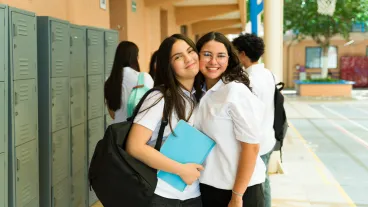
Feeling a sense of belonging at school linked to lower suicide risk for young adults
If you or someone you know needs support, phone Lifeline on 13 11 14 or the Suicide Call Back Service on 1300 659 467.
Call 000 if there is immediate danger.
For guidance reporting about suicide safely and appropriately in the media, visit Mindframe.
Feeling accepted, included and part of a school community during adolescence may play an important role in reducing the risk of suicidal thoughts and behaviours in early adulthood, according to new research from the Australian Institute of Family Studies (AIFS).
Having a positive relationship with parents and peers was also found to be protective of suicidal risk in later years for teens.
The report draws on new data from the Growing up in Australia – The Longitudinal Study of Australian Children (LSAC), the largest and longest-running study of child development in Australia, which has followed 10,000 children and their families since 2004.
The research shows suicidal thoughts and behaviours are reported by a substantial proportion of young people during late adolescence. Around 1 in 7 young people (14%) aged 18–19 years report suicidal ideation, plans or attempts, reinforcing the need for effective prevention efforts.
A strong sense of school belonging at 16–17 is associated with a 10% lower likelihood of suicidal thoughts and behaviours at ages 18–19. For young people with a prior history of suicidal thoughts and behaviours, school belonging and participation stand out as particularly strong protective factors.
Kirsten Campbell, LSAC Program Lead, said the findings reveal that everyday relationships and settings matter deeply to adolescent wellbeing.
“Our findings reaffirm the importance of supporting connection in the places young people spend their time,” Kirsten Campbell said.
“Schools are a critical setting for prevention, and this research provides strong evidence for sustained efforts to foster safety, inclusion and a sense of belonging at school.”
Kirsten Campbell added that the protective effects were particularly notable for young people already experiencing distress.
“The stronger protective associations for young people with a prior history of suicidal thoughts or behaviours highlight the importance of school‑based support,” she said.
“Targeted, coordinated support can help higher‑risk students stay engaged at school and connected to peers, with schools well placed to support follow‑up where needed.”
Other key findings:
- Active participation at school – meaning staying engaged with school life, regular ongoing attendance, staying connected with peers and teachers – is associated with an 18% lower likelihood of suicidal ideation, plans or attempts at ages 18–19 among young people with a prior history of suicidal thoughts or behaviours.
- Strong parental trust, communication and involvement at ages 16–17 are associated with later lower risk, with young people who experience high levels of parental connection being 4%–8% less likely to report suicidal thoughts and behaviours at ages 18–19 overall.
- Meaningful communication with peers is especially protective for young people with prior suicidal history. Better peer communication is associated with a reduced likelihood of suicidal thoughts and behaviours by around 14% at ages 18–19, while differences are minimal for those without prior distress.
Nieves Murray, CEO at Suicide Prevention Australia, said the report findings serve as a reminder of how important feeling supported and connected is during adolescence.
“This research reinforces that feeling accepted, included and supported during adolescence isn’t just crucial in the moment, but rather, it can have a lasting protective effect. Strong relationships with parents, peers and trusted adults helps create the sense of belonging young people need to feel safe, valued and understood, now and into the future.”
- The report Parent, peer and school connections may help reduce suicide risk for young Australians is a follow-up to Suicidal thoughts and behaviour in adolescence and draws on nationally representative data from LSAC to strengthen the evidence base for prevention efforts focused on relationships and social connection.
- Read the Explainer: Positive relationships with parents, peers and schools may help reduce suicide risk for young Australians
Media contact
Simone Redman-Jones
Phone: 0402 786 097
Email: [email protected]
22 April 2026